



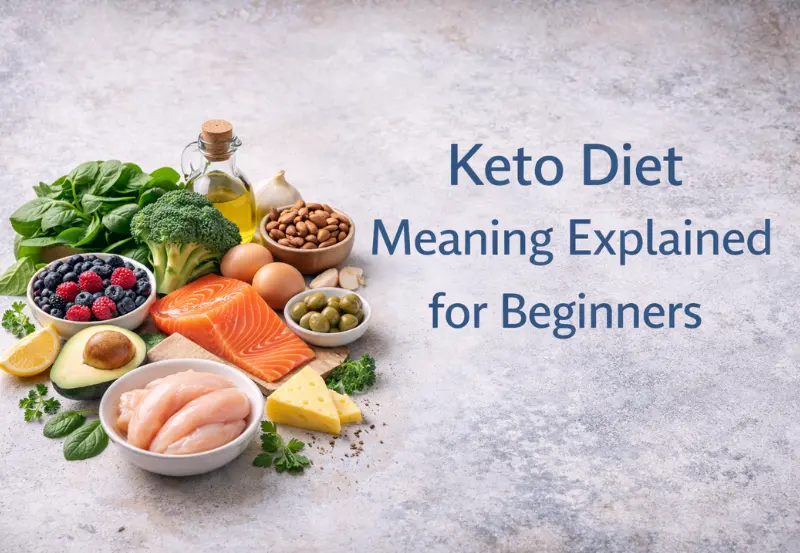
Understanding What the Keto Diet Really Is
Many people hear about keto through social media, weight loss stories, or before-and-after transformations. But very few actually understand the real keto diet meaning beyond “eat more fat and cut carbs.”
The keto diet meaning is rooted in metabolism. It refers to a way of eating that shifts your body from using carbohydrates as its primary fuel source to using fat instead.
Normally, your body runs on glucose. Glucose comes from carbohydrates such as bread, rice, fruit, and sugar. When you drastically reduce carbohydrate intake, your body enters a metabolic state called ketosis.
In ketosis, the liver converts fat into molecules called ketones. These ketones become your new fuel source.
That is the true keto diet meaning — metabolic fuel switching.
How Ketosis Works in Simple Terms
To fully understand keto diet meaning, you need to understand ketosis and how the ketogenic diet works metabolically.
When carbohydrate intake drops below roughly 20–50 grams per day:
- Blood sugar levels decrease
- Insulin levels fall
- Stored fat begins to break down
- The liver produces ketones
This metabolic shift allows the body to burn fat more efficiently.
It is not magic. It is a biological adaptation.
Once in ketosis, many people experience reduced appetite, more stable energy, and fewer cravings. This is why people often ask: does keto diet work?
For many individuals, it does — because it changes how the body uses energy.
Why People Choose the Keto Diet
The keto diet became popular because of its association with fat loss. However, weight loss is not the only reason people follow it.
People adopt keto for:
- Fat loss
- Blood sugar control
- Reduced cravings
- Appetite regulation
- Mental clarity
- Metabolic health support
Understanding keto diet meaning helps you realize it is not just a “low-carb trend.” It is a structured metabolic strategy.
Does Keto Diet Work for Weight Loss
This is one of the most searched questions: does keto diet work?
Short answer: it can.
Keto supports weight loss through several mechanisms:
- Reduced carbohydrate intake lowers insulin levels
- Lower insulin promotes fat release
- High fat and moderate protein improve satiety
- Stable blood sugar reduces cravings
When appetite decreases naturally, calorie intake often drops without conscious restriction.
That is why many people see fast initial results.
However, long-term success depends on consistency and food quality — not just carb elimination.
Keto Food List for Beginners
Understanding keto diet meaning is incomplete without knowing what to eat.
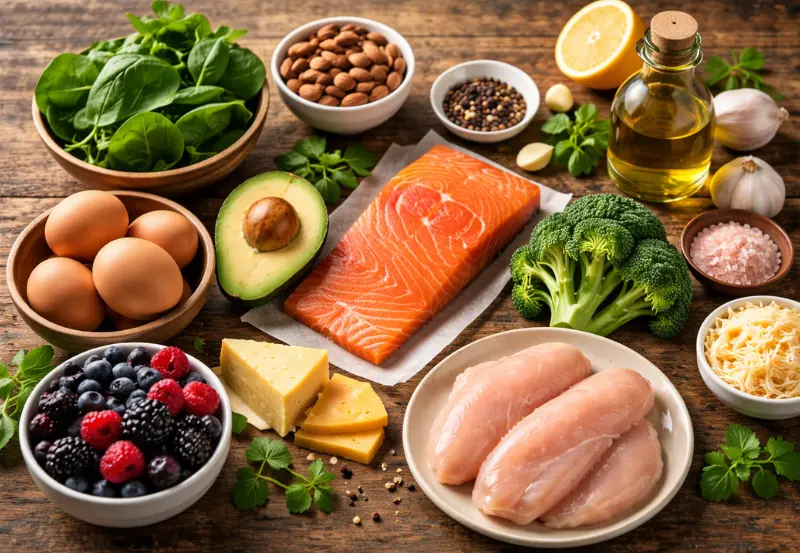
Here is a simple keto food list for beginners:
Proteins
- Eggs
- Chicken
- Beef
- Salmon
- Turkey
- Pork
Healthy Fats
- Avocado
- Olive oil
- Coconut oil
- Butter
- Cheese
- Heavy cream
Low-Carb Vegetables
- Spinach
- Broccoli
- Zucchini
- Cauliflower
- Asparagus
- Cabbage
Nuts and Seeds (Moderate Amounts)
- Almonds
- Walnuts
- Chia seeds
- Flaxseeds
Foods to avoid include bread, rice, pasta, sugary drinks, candy, and most fruits.
A proper keto food list for beginners focuses on whole, minimally processed foods.
What a High Protein Keto Diet Means
Some people confuse keto with unlimited fat consumption.
Traditional keto is high fat, moderate protein and very low carb.
However, many people now follow a high protein keto diet variation. This approach increases protein slightly while keeping carbs very low.
A high protein keto diet can help:
- Preserve muscle mass
- Improve satiety
- Support fat loss
- Maintain metabolic rate
Protein intake becomes especially important during weight loss.
Understanding the difference between traditional keto and high protein keto diet versions helps prevent mistakes.
Is Keto Diet Safe
Another common question is: is keto diet safe?
For most healthy individuals, short-term keto is generally safe when properly planned.
However, safety depends on:
- Medical history
- Medication use
- Nutrient balance
- Hydration levels
- Electrolyte intake
Some people experience what is called the “keto flu” during adaptation. Symptoms may include:
- Headache
- Fatigue
- Irritability
- Dizziness
These symptoms often result from electrolyte imbalance rather than the diet itself.
Long-term safety requires proper nutrient diversity and medical supervision for those with health conditions.
Common Misunderstandings About Keto Diet Meaning
Many misconceptions exist around keto.
Some believe keto means eating unlimited bacon. Others think it eliminates all vegetables. Some assume it is purely a protein diet.
None of these are accurate.
Keto diet meaning revolves around macronutrient ratios and metabolic state — not specific foods.
A well-formulated keto plan includes vegetables, quality protein, healthy fats, and structured portion control.
The quality of food matters as much as the carb count.
Keto vs Low Carb Diet
People often confuse keto with general low carb eating.
Low carb diets reduce carbohydrates but may not be strict enough to induce ketosis.
Keto requires a more aggressive carb reduction.
Typically:
- Low carb: 50–150 grams of carbs daily
- Keto: 20–50 grams daily
The stricter carbohydrate limit is what defines keto diet meaning.
Who Should Be Cautious With Keto
While keto can work well for many, certain groups should approach it carefully:
- Pregnant or breastfeeding women
- Individuals with kidney disease
- People with liver disorders
- Those with eating disorder history
- Individuals on insulin or glucose-lowering medication
Medical guidance is important for these groups.
Keto is a tool — not a universal solution.
A 7 Day Beginner Keto Example Plan
Understanding keto diet meaning becomes easier when you see how it works in daily meals. Structure removes confusion.
Here is a simple 7-day example outline for beginners:
Day 1
Breakfast: Scrambled eggs cooked in butter with spinach
Lunch: Grilled chicken salad with olive oil dressing
Dinner: Salmon with roasted broccoli
Day 2
Breakfast: Omelet with cheese and mushrooms
Lunch: Turkey lettuce wraps with avocado
Dinner: Beef stir fry with zucchini
Day 3
Breakfast: Greek yogurt (unsweetened) with chia seeds
Lunch: Tuna salad with olive oil
Dinner: Pork chops with asparagus
The remaining days follow a similar structure: protein + healthy fat + low-carb vegetables.
This aligns directly with a keto food list for beginners and keeps carbohydrates controlled.
Planning removes guesswork. Guesswork leads to mistakes.

Mistakes Beginners Make on Keto
Even when people understand keto diet meaning, they still make common mistakes.
Some of the most frequent errors include:
- Eating too little protein
- Relying heavily on processed “keto” snacks
- Ignoring vegetables
- Not tracking carbohydrates carefully
- Drinking too many calories
- Expecting instant long-term results
A high protein keto diet approach can often solve the “not enough protein” issue, especially for active individuals.
Consistency beats perfection.
Realistic Expectations for Results
Many people ask: does keto diet work fast?
Initial weight loss during the first week is often rapid. However, much of that early drop is water weight due to glycogen depletion.
True fat loss takes time.
Realistic expectations:
- Week 1: Water weight reduction
- Weeks 2–4: Gradual fat loss begins
- Month 2 onward: Steady metabolic adaptation
Patience is essential. Understanding keto diet meaning helps you avoid chasing unrealistic outcomes.
Long Term Sustainability Strategy
Keto is most effective when viewed as a strategy, not a crash diet.
Sustainability depends on:
- Whole food choices
- Proper electrolyte intake
- Adequate protein
- Structured carb limits
- Social flexibility
Some individuals transition from strict keto to a moderate low-carb approach after reaching their goals.
That does not mean keto failed. It means the tool served its purpose.
The question “is keto diet safe” becomes more relevant when the diet lacks variety. Long-term sustainability requires micronutrient diversity from vegetables, nuts, seeds, and quality proteins.
Balance determines long-term success.

How to Break a Weight Loss Plateau on Keto
Plateaus happen in any diet.
If progress stalls:
- Recalculate carbohydrate intake
- Increase protein slightly (high protein keto diet approach)
- Reduce hidden fats
- Improve sleep quality
- Increase daily movement
- Temporarily remove calorie-dense extras
Sometimes the issue is not ketosis. It is a calorie balance.
Understanding keto diet meaning helps you troubleshoot logically instead of emotionally.
Keto Diet Meaning Beyond Weight Loss
While fat loss is a major focus, keto has other potential benefits.
Some individuals report:
- Improved blood sugar stability
- Reduced cravings
- Better appetite control
- Improved metabolic awareness
However, keto is not a universal cure. It is one nutritional framework among many.
The key is individual response.
Final Thoughts
Keto diet meaning is not about eliminating food groups randomly. It is about understanding how macronutrients influence metabolism.
When carbohydrates are restricted, the body adapts by using fat as its primary energy source.