




Understanding Why Weight Loss Stalls on Keto
Many people start keto with high expectations. The early results can be dramatic, especially during the first week. However, after initial progress, some individuals suddenly find themselves thinking, keto diet not losing weight anymore — what happened?
This situation is more common than most people realize.
The ketogenic diet works by lowering carbohydrate intake, reducing insulin levels, and shifting the body into fat-burning mode. But fat loss is not automatic simply because carbohydrates are low. Multiple factors influence results, including calorie intake, hormones, stress, sleep, and metabolic adaptation.
Before assuming keto “doesn’t work,” it’s important to evaluate what may be slowing progress.
Keto Weight Gain First Week – Is It Normal?
One of the most confusing experiences is keto weight gain in the first week. Many people expect instant fat loss, but the scale sometimes moves upward instead.
This can happen for several reasons:
- Increased sodium intake causing water retention
- Hormonal fluctuations
- Digestive adjustment
- Increased calorie intake from fats
- Glycogen fluctuations in active individuals
While most people lose water weight early, others may temporarily retain fluid due to electrolyte shifts. High-fat foods are calorie-dense, and overeating them can offset any fat-burning advantage.
The key is not to panic during the first week. True fat loss takes longer than a few days.
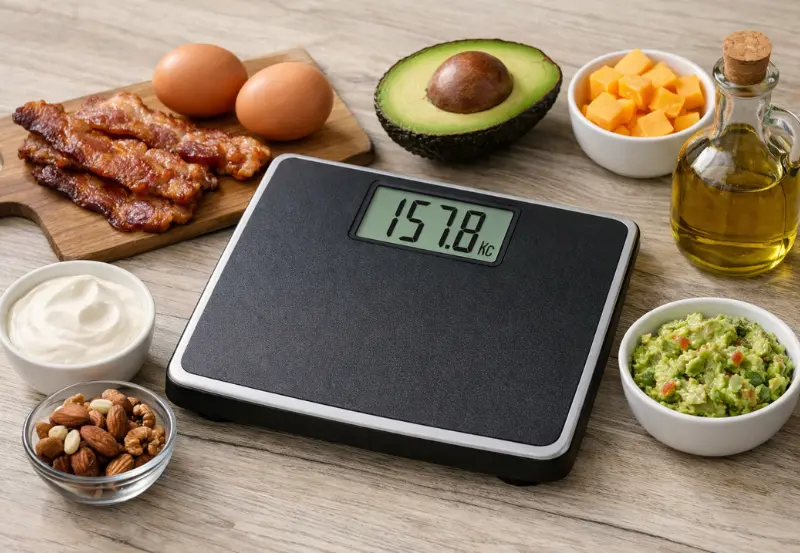
Why Am I Not Losing Weight on Keto After 2 Weeks?
This is one of the most searched questions: why am I not losing weight on keto after 2 weeks?
Two weeks may feel long emotionally, but physiologically, it is still early. During this time, the body is adapting to ketosis. Some individuals experience:
- Delayed metabolic switching
- Temporary water retention
- Increased cortisol from dietary change
- Digestive slowdown
- Calorie miscalculation
Many beginners unknowingly consume excess calories. Fat contains 9 calories per gram, making portion control important.
Even if carbohydrates are low, a calorie surplus can stall fat loss.
Additionally, stress plays a major role. Elevated cortisol levels can slow fat burning and increase water retention, masking progress.
If you are asking, “why am I not losing weight on keto after 2 weeks,” the answer often lies in patience, portion awareness, and stress management.
Female Not Losing Weight Keto – Hormonal Factors
One common concern is females not losing weight. Women often experience different fat-loss patterns than men due to hormonal fluctuations.
Several factors may influence results:
- Estrogen and progesterone cycles
- Thyroid function sensitivity
- Stress hormone response
- Caloric needs variation
- Menstrual cycle water retention
Women are generally more sensitive to extreme calorie restriction. Very low carb intake combined with aggressive calorie cutting may increase stress hormones, slowing metabolism.
In some cases, women may benefit from:
- Slightly increasing carbohydrates around workouts
- Avoiding excessive fasting
- Prioritizing protein intake
- Ensuring adequate sleep
When discussing female not losing weight keto scenarios, hormonal context matters significantly.
The solution is rarely “cut more carbs.” Often, it involves balance.
Not Losing Weight on Keto After 2 Months – What It Really Means
If you are not losing weight on keto after 2 months, the situation requires deeper analysis.
By this point, the body has fully adapted to ketosis. A prolonged plateau may indicate:
- Calorie intake matching calorie expenditure
- Reduced metabolic rate from dieting
- Lack of strength training
- Inadequate protein intake
- Hidden carbohydrate consumption
- Reduced daily movement
Long-term plateaus often result from energy balance rather than ketosis failure.
As body weight decreases, calorie needs drop. What once created a deficit may now be maintenance.
Recalculating daily intake and increasing resistance training can reignite progress.
Hidden Reason #1 – You Are Eating Too Much Fat
Keto encourages fat consumption, but it does not mean unlimited fat intake.
Many people experiencing keto diet not losing weight issues are unknowingly overeating:
- Cheese
- Nuts
- Nut butters
- Heavy cream
- Keto desserts
- Bulletproof coffee
While these foods are low carb, they are extremely calorie-dense.
Fat loss requires a calorie deficit. Ketosis does not override basic thermodynamics.
Hidden Reason #2 – Protein Is Too Low
Some individuals misinterpret keto as “mostly fat.”
Protein is essential for:
- Muscle preservation
- Metabolic rate maintenance
- Satiety
- Hormonal balance
Too little protein can slow metabolism and increase hunger.
A balanced ketogenic approach includes moderate to adequate protein, not minimal protein.
Hidden Reason #3 – Stress and Poor Sleep
Stress is often overlooked when addressing keto diets not losing weight.
Chronic stress elevates cortisol, which can:
- Increase abdominal fat storage
- Cause water retention
- Increase cravings
- Disrupt sleep
Poor sleep also disrupts hunger hormones such as ghrelin and leptin.
Even perfect macronutrient ratios cannot compensate for chronic sleep deprivation.
Hidden Reason #4 – You’re Not Tracking Accurately
Many people estimate portions rather than measuring them.
Hidden carbs may come from:
- Sauces
- Salad dressings
- “Sugar-free” products
- Processed keto snacks
Underestimating calories by even 200–300 per day can eliminate a deficit entirely.
If you are not losing weight on keto after 2 months, accurate tracking may reveal the issue.
Hidden Reason #5 – You Adapted Metabolically
One major reason behind the keto diet not losing weight is metabolic adaptation.
When you diet for an extended period, your body becomes more efficient. It burns fewer calories for the same activities. This is a survival mechanism.
If you are not losing weight on keto after 2 months, your body may have:
- Reduced resting metabolic rate
- Lowered non-exercise activity (NEAT)
- Improved energy efficiency
- Decreased spontaneous movement
In simple terms, you burn fewer calories than before.
To counter this:
- Increase daily steps
- Add resistance training
- Recalculate calorie needs
- Consider a short diet break
Metabolism adapts. Strategy must adapt too.

Hidden Reason #6 – Too Much Snacking
Many people snack frequently on keto because foods are “allowed.”
Common stall foods include:
- Nuts by the handful
- Cheese cubes
- Keto bars
- Cream in coffee
- Fat bombs
Even if carbs are low, constant snacking prevents the body from tapping into stored fat.
Try consolidating meals into structured eating windows rather than grazing all day.
Hidden Reason #7 – You’re Relying on the Scale Only
When asking, why am I not losing weight on keto after 2 weeks, the scale may not tell the full story.
The scale measures:
- Fat
- Muscle
- Water
- Glycogen
- Digestive content
Especially for women, water retention around the menstrual cycle can mask fat loss. This is why female not losing weight keto concerns often require patience.
Track:
- Waist measurements
- Progress photos
- Strength gains
- Clothing fit
Fat loss is not always linear.
Hidden Reason #8 – You Are Not Strength Training
Keto supports fat burning, but muscle preservation depends on resistance training.
Without strength training:
- Muscle mass may decrease
- Metabolic rate may drop
- Body composition may worsen
Adding 3–4 weekly resistance sessions can dramatically improve results.
Muscle increases calorie expenditure even at rest.
Hidden Reason #9 – You’re Overdoing Fasting
Many keto followers combine intermittent fasting with low carbs. While this works for some, excessive fasting can backfire.
Especially in cases of female not losing weight keto, aggressive fasting may:
- Increase cortisol
- Disrupt hormones
- Lower thyroid output
- Reduce energy
If you are stuck, try:
- Eating enough protein
- Avoiding prolonged fasting
- Supporting recovery
More restriction is not always the answer.
How to Break a Keto Weight Loss Plateau
If you are not losing weight on keto after 2 months, here is a structured reset strategy:
Recalculate Calories
As weight decreases, calorie needs drop. Adjust intake accordingly.
Increase Protein Intake
Support muscle preservation and satiety.
Reduce Hidden Fats
Eliminate unnecessary calorie-dense extras like cream and nut butters.
Improve Sleep
Aim for 7–9 hours nightly.
Increase Daily Movement
Add 2,000–3,000 extra steps per day.
Add Progressive Strength Training
Focus on compound movements.
Consider a Short Maintenance Phase
A 1–2 week calorie maintenance break can reset hormones and reduce stress.
Consistency plus adjustment leads to results.

When Keto Might Not Be Right for You
Sometimes the issue isn’t effort — it’s compatibility.
If you consistently struggle with keto diet not losing weight despite proper tracking and lifestyle management, consider:
- A moderate low-carb diet instead
- A higher protein approach
- Cycling carbohydrates around workouts
- Consulting a registered dietitian
Keto works well for many, but it is not mandatory for fat loss.
Sustainable weight loss depends on adherence more than carb elimination alone.
Realistic Expectations for Keto Fat Loss
Many people expect dramatic weekly drops. However, after early water weight shifts, realistic fat loss averages:
- 0.5–1% of body weight per week
If you gain weight in the first week, that does not determine long-term outcome.
If you are asking why I am not losing weight on keto after 2 weeks, understand that early adaptation varies by individual.
Patience is often the missing variable.
Long Term Strategy for Sustainable Results
Instead of focusing solely on rapid loss, prioritize:
- Protein adequacy
- Whole foods
- Strength training
- Stress reduction
- Consistent sleep
- Calorie awareness
If you are not losing weight on keto after 2 months, the solution is almost always behavioral fine-tuning — not abandoning the plan entirely.
Fat loss is a long game.
Final Thoughts
Experiencing a keto diet not losing weight can feel frustrating, but it rarely means the diet is broken.
Whether you are dealing with:
- Keto weight gain first week
- Why am I not losing weight on keto after 2 weeks
- Female not losing weight keto
- Not losing weight on keto after 2 months
The underlying causes usually involve calorie balance, hormones, stress, muscle mass, or tracking accuracy.
Ketosis supports fat burning, but it does not override energy balance or lifestyle factors.
Before making drastic changes, analyze your habits objectively.
Small adjustments often create major breakthroughs.
Sustainable fat loss requires patience, structure, and consistency — not extreme restriction.