



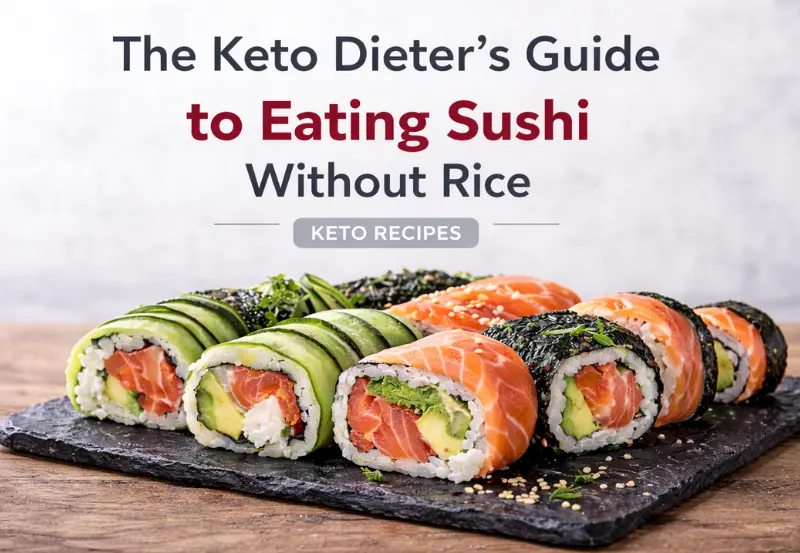
Understanding Sushi on Keto Diet and How It Fits Low-Carb Eating
Many people who follow a ketogenic lifestyle often wonder if they can still enjoy sushi. Traditional sushi usually contains white rice, which is high in carbohydrates. Because keto diets focus on very low carbohydrate intake, many people assume sushi must be avoided completely. However, the reality is more flexible. With the right choices, sushi on keto diet plans can still be enjoyed.
The key difference between traditional sushi and keto-friendly sushi lies mainly in the rice. Sushi rice contains sugar and starch, which significantly increases carbohydrate content. When people adapt sushi for keto diets, they often replace rice with low-carb alternatives or simply choose sushi styles that do not include rice.
Fortunately, many Japanese dishes naturally fit into low-carb eating patterns. For example, sashimi consists only of fresh fish slices without rice, making it one of the simplest keto-friendly choices.
Understanding how to modify sushi options helps people enjoy sushi on keto diet plans while staying within their carbohydrate limits.
How the Keto Diet Changes Your Sushi Choices
The ketogenic diet focuses on reducing carbohydrate intake so the body enters a metabolic state called ketosis. In ketosis, the body burns fat for energy instead of carbohydrates. Because of this shift, most keto meal plans limit carbs to around 20 to 50 grams per day.
Traditional sushi can easily exceed this limit because sushi rice is packed with carbohydrates. A single sushi roll may contain more than 30 grams of carbs depending on ingredients.
However, keto-friendly sushi focuses on ingredients that are naturally low in carbohydrates such as fish, seaweed, vegetables, and healthy fats.
Instead of avoiding sushi completely, many keto followers simply adjust their choices. This approach allows them to enjoy sushi on keto diet plans without breaking ketosis.
Some of the best strategies include:
- Choosing sashimi instead of rice-based rolls
- Ordering sushi wrapped in cucumber instead of rice
- Avoiding sweet sauces that contain sugar
- Choosing fatty fish like salmon or tuna
- Requesting no rice sushi rolls at sushi restaurants
These small adjustments make sushi much more compatible with keto eating.
Is Sashimi Keto Friendly
One of the most common questions people ask when exploring sushi on keto diet options is whether sashimi fits keto guidelines. The good news is that sashimi is one of the most keto-friendly foods available at sushi restaurants.
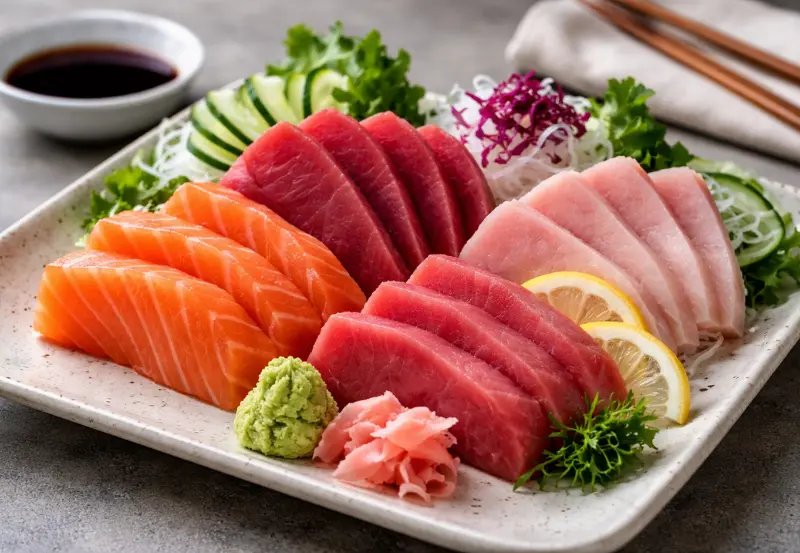
Sashimi consists of thin slices of raw fish served without rice. Because it contains only protein and healthy fats, its carbohydrate content is extremely low.
Common sashimi options include:
- Salmon
- Tuna
- Yellowtail
- Mackerel
- Octopus
- Shrimp
These fish varieties contain almost no carbohydrates, which makes them ideal for keto diets.
For people who enjoy seafood, sashimi can become one of the best sushi on keto diet choices. It allows you to enjoy authentic Japanese flavors while staying within your daily carb limits.
Another advantage of sashimi is its nutritional value. Many types of fish provide omega-3 fatty acids, high-quality protein, and important vitamins that support overall health.
Because of these benefits, sashimi remains one of the safest options when eating sushi on keto diet plans.
Best Sushi on Keto Diet Without Rice
Many sushi restaurants now offer creative alternatives for low-carb diners. Instead of using rice, chefs sometimes wrap sushi ingredients in vegetables such as cucumber or avocado.
These alternatives provide the same sushi experience while keeping carbohydrate intake low.
Some of the best sushi on keto diet options include:
- Cucumber wrapped sushi rolls – Fresh fish and vegetables wrapped in thin cucumber slices instead of rice
- Avocado sushi rolls – Healthy fats from avocado combined with fish and seaweed
- Naruto rolls – A popular sushi roll wrapped in cucumber rather than rice
- Sashimi platters – A variety of fresh fish slices without rice
- Seaweed salad with fish – A light and flavorful side dish
These alternatives allow people to enjoy sushi on keto diet plans while still experiencing the flavor and texture of traditional sushi.
Many sushi restaurants are also willing to customize orders. You can often request rolls made without rice or ask for extra vegetables instead.
This flexibility makes keto sushi easier to find than many people expect.
Salmon Sushi on Keto Diet and Why It Is Popular
Among all sushi ingredients, salmon is one of the most popular choices for keto eaters. Salmon contains healthy fats, high-quality protein, and very low carbohydrate content.
Because the ketogenic diet emphasizes fat as a primary energy source, fatty fish like salmon fit perfectly into keto meal plans.
Salmon sushi on keto diet menus often appears in forms such as:
- Salmon sashimi
- Salmon avocado rolls without rice
- Grilled salmon sushi bowls without rice
- Smoked salmon cucumber rolls
These dishes combine healthy fats with satisfying protein, which helps keep hunger under control.
Another benefit of salmon is its omega-3 fatty acids. These healthy fats support heart health and may help reduce inflammation.
Because of these nutritional advantages, salmon often appears in lists of the best sushi on keto diet choices.
Many keto followers prefer salmon because it delivers flavor, nutrition, and satiety without adding unnecessary carbohydrates.
No Rice Sushi Roll Calories and Carb Content
When people begin exploring sushi on keto diet options, one of their biggest concerns is calorie and carbohydrate content. Removing rice significantly reduces the carb count of sushi rolls.
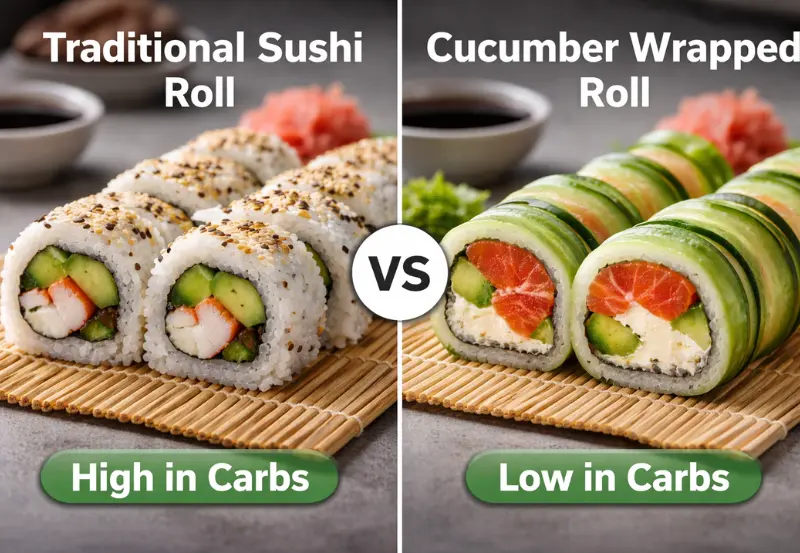
Traditional sushi rolls can contain large amounts of carbohydrates due to rice. However, no rice sushi roll calories are much lower in comparison.
For example:
- A traditional California roll may contain 35–40 grams of carbs
- A cucumber wrapped sushi roll may contain 5–8 grams of carbs
- A sashimi serving may contain almost zero carbs
This difference makes rice-free sushi rolls much more suitable for keto diets.
Another advantage is calorie balance. Without rice, sushi rolls often contain fewer calories while still providing protein and healthy fats.
Because of this, many keto eaters prefer ordering sushi rolls without rice when dining at Japanese restaurants.
Understanding no rice sushi roll calories helps people make smarter choices while following keto eating plans.
Common Sushi Ingredients That Are Keto Friendly
Not all sushi ingredients contain high carbohydrates. Many ingredients used in sushi preparation are naturally low in carbs and suitable for keto diets.
Common keto-friendly sushi ingredients include:
- Fresh fish such as salmon, tuna, and yellowtail
- Seaweed sheets used for wrapping sushi
- Avocado, which provides healthy fats
- Cucumber slices used for low-carb rolls
- Cream cheese used in certain sushi rolls
These ingredients allow sushi chefs to create flavorful dishes without relying on high-carb rice.
When ordering sushi on keto diet menus, focusing on these ingredients helps keep carbohydrate intake low while still enjoying a satisfying meal.
Hidden Carbs in Sushi That Keto Dieters Should Watch
Even when people try to choose sushi on keto diet menus, hidden carbohydrates can still appear in certain ingredients. Many sushi sauces and toppings contain sugar or starch that may increase carb intake without people realizing it.
For example, sushi rice itself is seasoned with sugar and vinegar, which adds additional carbohydrates. But sauces are another common source of hidden carbs.
Some sushi ingredients that may contain extra carbohydrates include:
- Sweet soy sauce
- Teriyaki sauce
- Eel sauce
- Tempura batter
- Imitation crab meat
These ingredients can increase carbohydrate levels quickly, which may push keto followers out of ketosis.
When ordering sushi on keto diet plans, it helps to keep sauces simple. Plain soy sauce, wasabi, and fresh ginger usually contain fewer carbohydrates compared to sweet sauces.
Reading ingredients carefully or asking restaurant staff about preparation methods can also help reduce hidden carbs.
How to Order Low Carb Sushi at Restaurants
Eating out while following keto guidelines can sometimes feel challenging. However, sushi restaurants usually offer many low-carb options if you know what to request.
Instead of ordering traditional sushi rolls, keto diners can focus on simpler dishes built around fresh fish and vegetables.
Helpful tips when ordering sushi on keto diet menus include:
- Choose sashimi instead of rice rolls
- Ask for sushi rolls without rice
- Replace rice with cucumber wraps
- Avoid tempura fried items
- Request sauces on the side
Many sushi chefs are happy to customize orders when customers ask. Restaurants often create cucumber-wrapped rolls or serve fish and vegetables without rice.
This approach allows people to enjoy sushi on keto diet plans while still experiencing authentic Japanese flavors.
Making Keto Sushi at Home
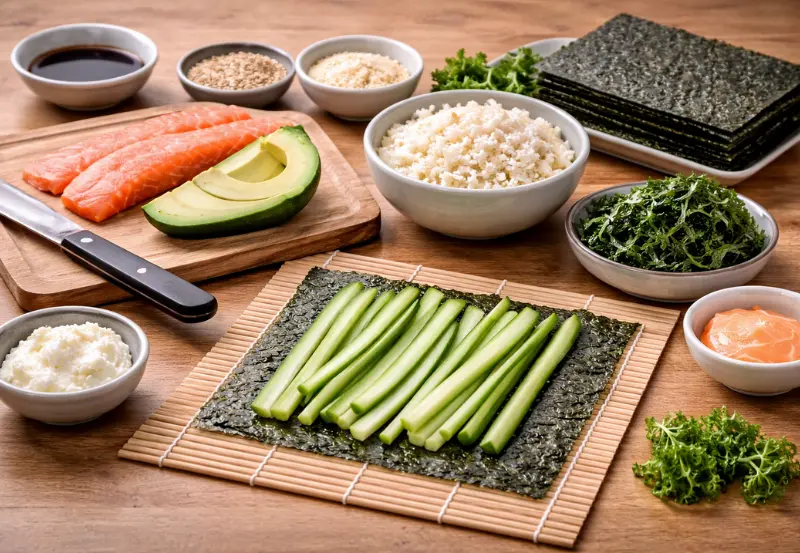
Preparing sushi at home gives full control over ingredients, making it easier to follow a ketogenic diet. Homemade sushi allows you to replace rice with low-carb alternatives while keeping the flavors people love.
One popular option is using thin cucumber slices instead of rice. Another option is using cauliflower rice, which contains far fewer carbohydrates than traditional sushi rice.
A simple keto sushi roll can include ingredients such as:
- Fresh salmon or tuna
- Avocado slices
- Cucumber strips
- Cream cheese
- Seaweed sheets
To prepare keto sushi at home, spread the ingredients inside seaweed sheets and roll them tightly using a bamboo sushi mat. Without rice, the rolls remain low in carbohydrates while still delivering satisfying flavor.
Making sushi at home also helps control no rice sushi roll calories and ensures every ingredient fits keto guidelines.
Best Sushi on Keto Diet for Different Preferences
Different people enjoy different types of sushi. Fortunately, keto-friendly options exist for many taste preferences.
Some of the best sushi on keto diet choices include simple fish dishes, cucumber rolls, and creative low-carb alternatives.
Popular keto sushi choices include:
- Salmon sashimi – rich in healthy fats and protein
- Tuna sashimi – lean and very low in carbs
- Naruto rolls – cucumber-wrapped sushi rolls
- Salmon avocado rolls without rice
- Spicy tuna wrapped in cucumber
These options allow sushi lovers to enjoy authentic flavors while maintaining low carbohydrate intake.
By focusing on fresh fish, vegetables, and healthy fats, keto followers can still enjoy sushi without worrying about excessive carbs.
Nutritional Benefits of Keto Friendly Sushi
Choosing sushi on keto diet menus does not only help control carbohydrates. Many keto sushi options also provide important nutrients that support overall health.
Fish is one of the healthiest protein sources available. It contains essential nutrients that contribute to heart health, brain function, and muscle maintenance.
Some key nutritional advantages of keto-friendly sushi include:
- High-quality protein that supports muscle health
- Omega-3 fatty acids that support heart health
- Vitamins and minerals found in seafood
- Healthy fats that help maintain energy levels
Because of these nutrients, sushi can become a valuable part of a balanced keto diet when chosen carefully.
In particular, salmon sushi on keto diet plans provides beneficial fats that help people stay full longer while maintaining stable energy levels.
Common Mistakes When Eating Sushi on Keto Diet
While sushi can be keto-friendly, certain mistakes may increase carb intake without people noticing.
Many beginners assume that all sushi is healthy, but traditional rolls often contain hidden sugars and starches.
Common mistakes include:
- Choosing sushi rolls made with white rice
- Ordering tempura rolls that contain fried batter
- Using sweet sauces like eel sauce or teriyaki
- Eating imitation crab meat, which contains added starch
- Ignoring portion sizes when eating sashimi
Avoiding these mistakes helps ensure that sushi on keto diet plans remains truly low in carbohydrates.
Learning which ingredients to avoid can make keto sushi much easier to enjoy.
Creative No Rice Sushi Ideas for Keto Dieters
As keto diets become more popular, chefs and home cooks have developed creative ways to prepare sushi without rice.
These recipes focus on fresh ingredients and low-carb substitutes that maintain the sushi experience.
Some creative no rice sushi ideas include:
- Cucumber sushi rolls with salmon and avocado
- Seaweed wraps filled with tuna salad
- Zucchini sushi rolls with cream cheese and fish
- Avocado sushi boats topped with sashimi
These creative dishes keep no rice sushi roll calories low while still delivering satisfying texture and flavor.
They also allow people following sushi on keto diet plans to experiment with new ingredients and recipes.
Why Sushi Can Still Fit Into a Keto Lifestyle
Many people believe keto diets require avoiding restaurant foods entirely. However, sushi restaurants often provide many dishes that naturally fit into low-carb eating.
The key is understanding which ingredients contain carbohydrates and which options remain keto-friendly.
Fresh fish, vegetables, and seaweed naturally contain very few carbohydrates. When combined correctly, they create flavorful dishes that align well with ketogenic nutrition goals.
This flexibility allows people to enjoy sushi on keto diet plans without feeling restricted.
Instead of eliminating sushi completely, keto followers simply adjust their choices and preparation methods.
Final Thoughts
Sushi can still be part of a healthy ketogenic lifestyle when chosen carefully. While traditional sushi rice contains large amounts of carbohydrates, many alternatives make sushi compatible with keto eating.
Options such as sashimi, cucumber-wrapped rolls, and homemade keto sushi allow people to enjoy sushi on keto diet plans without exceeding their daily carb limits.
Understanding ingredients like sauces, rice substitutes, and fish varieties also helps keto followers make smarter choices when dining at sushi restaurants.
From fresh sashimi to creative no rice sushi roll recipes, there are many ways to enjoy the flavors of sushi while staying in ketosis.
With the right knowledge and a little creativity, sushi on keto diet plans can remain both delicious and nutritious for anyone following a low-carb lifestyle.