



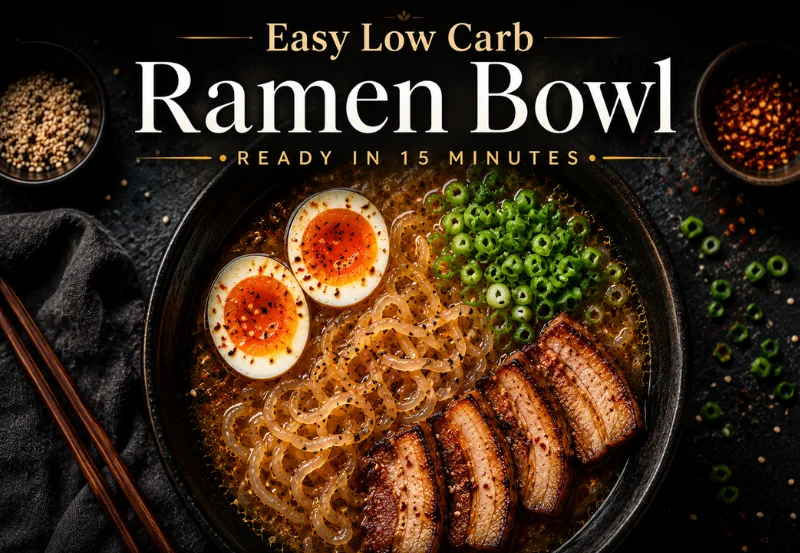
Did You Give Up Ramen on Keto
Let me ask you something. When you first started keto, what was the one food you missed the most?
For most people I talk to the answer is ramen. Not pizza, not bread — ramen. That warm, deeply savory, comforting bowl that feels like the perfect meal after a long day.
Here is what I want you to know. You never had to give it up. You just needed a smarter way to build it — one that keeps all the flavor and warmth while cutting the carbs down to almost nothing.
By the time you finish reading this blog, you will know exactly how to make a low carb ramen bowl at home in 15 minutes that tastes so close to the real thing you will wonder why you ever thought this was complicated.
Why Regular Ramen Fails on Keto
Traditional ramen noodles are made from wheat flour, water, and salt. One single serving contains between 50 and 70 grams of carbohydrates — more than most people’s entire daily keto allowance in one bowl.
Add broth seasonings that often contain sugar and starch-based thickeners and you have a dish that knocks you out of ketosis completely.
But here is what most people do not realize. The noodles in traditional ramen carry almost no flavor on their own. All the flavor lives in the broth, the aromatics, and the toppings — and every single one of those elements is completely keto friendly when built the right way.
Swapping the noodles is really the only change you need to make. Everything else stays exactly the same and your low carb ramen bowl tastes just as incredible.
Shirataki Noodles Are the Answer
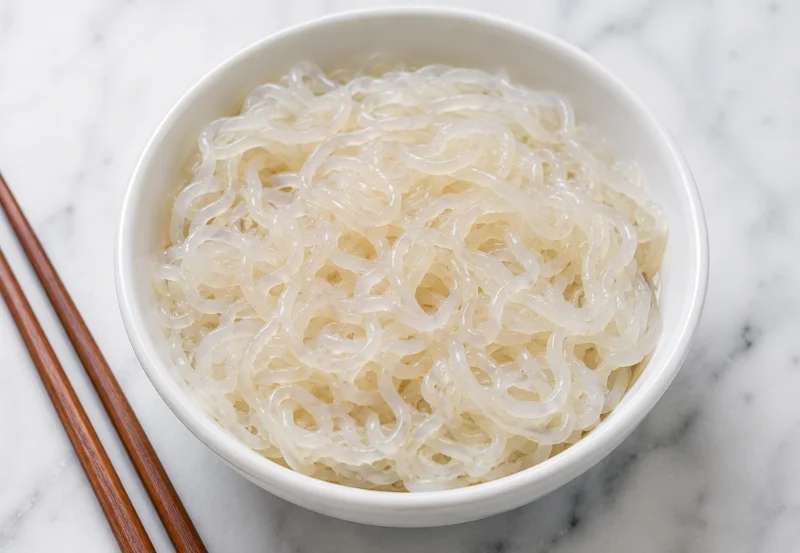
In my experience shirataki noodles are the single best substitute for low carb ramen — and it is not even close. Made from konjac root, they contain virtually zero net carbs and zero calories per serving.
What makes them perfect for ramen is their texture. They are slightly chewy, translucent, and absorb broth flavor beautifully. Once you rinse them properly in boiling water and dry them in a hot pan for a minute before adding to your broth, they become remarkably close to the real noodle experience.
I always recommend the angel hair or thin style shirataki for ramen specifically — these shapes work best in a broth-based bowl and give you that satisfying slurp that makes ramen feel like ramen.
Other Noodle Options Worth Trying
If you cannot find shirataki noodles, here are two other options I have personally tested:
Zucchini Noodles work as a backup but they release water into the broth which dilutes the flavor. Add them right before serving and cook for no more than 60 seconds.
Kelp Noodles are another solid zero-carb choice. They start crunchy but soften beautifully after a few minutes in hot broth. I recommend them as a second choice after shirataki.
Noodle | Net Carbs | Best Feature |
Shirataki | 0g | Chewy, absorbs broth perfectly |
Zucchini | 2g | Easy to find everywhere |
Kelp | 0g | Great texture after soaking |
My honest recommendation — always start with shirataki. Once you try them properly prepared, you will not go back to any other substitute.
What You Need for This Recipe
Everything here is available at a standard US grocery store. Nothing hard to find.
For the broth:
- Chicken or beef bone broth — 2 cups per serving
- Garlic cloves — 3, minced
- Fresh ginger — 1 teaspoon, grated
- Sesame oil — 1 tablespoon
- Coconut aminos or soy sauce — 2 tablespoons
- Chili paste — half a teaspoon
- Salt and white pepper to taste
For the noodles:
- Shirataki noodles — 1 package per serving
Toppings:
- Soft boiled egg, green onions, baby bok choy, bean sprouts, sesame seeds
In my experience the quality of your bone broth makes the biggest difference. I always recommend a good quality chicken or beef bone broth over regular stock — the depth of flavor is noticeably richer and the collagen content makes the broth feel more luxurious in every spoonful.
Building a Rich Keto Ramen Broth
The broth is everything in this recipe. A weak broth makes a forgettable bowl. A deeply flavored keto ramen broth makes a bowl you will think about for days.
Start by sautéing minced garlic and fresh ginger in sesame oil for exactly 60 seconds. This single step creates the aromatic backbone of authentic ramen flavor and takes almost no time at all.
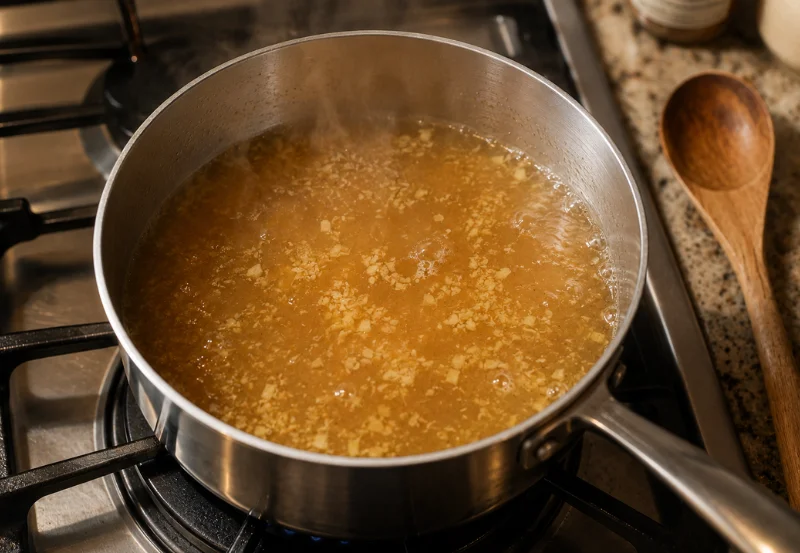
Next add your bone broth, coconut aminos, and chili paste. Simmer uncovered for 5 minutes to let the flavors concentrate and meld together fully.
The finishing touch — and this is the detail most recipes skip — is a few drops of toasted sesame oil added right before serving. This creates that signature ramen aroma that hits you the moment you lift the bowl. It is a small step that makes an enormous difference in the final experience.
Step by Step in 15 Minutes
Follow this exactly and your bowl will be on the table in 15 minutes flat.
Step 1 — Prep your shirataki noodles (3 min) Drain, rinse under warm water, then dry in a hot pan for 90 seconds with no oil. This removes the natural odor and gives them the right chewy texture.
Step 2 — Build the base (2 min) Heat sesame oil in a saucepan. Add garlic and ginger. Stir for 60 seconds until fragrant.
Step 3 — Simmer the broth (5 min) Add bone broth, coconut aminos, and chili paste. Simmer uncovered for 5 minutes. Season with salt and white pepper. Finish with sesame oil.
Step 4 — Cook your protein (5 min) Pan-sear thinly sliced chicken or pork belly separately in sesame oil and a splash of coconut aminos.
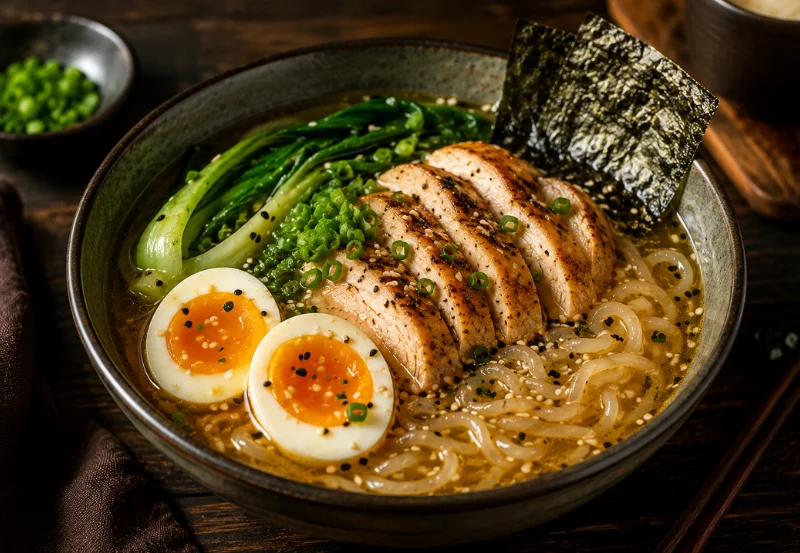
Step 5 — Assemble Noodles in the bowl first. Ladle the hot broth over them. Add protein and all your toppings.
The Soft Boiled Egg Trick
In my opinion the soft boiled egg is the single most important topping in this entire bowl — and most people get it wrong.
The goal is a jammy orange yolk that breaks into the broth and adds richness, protein, and that unmistakable ramen restaurant quality. Here is exactly how I do it every single time:
Bring a pot of water to a full rolling boil. Gently lower the eggs in and set a timer for exactly 6 minutes and 30 seconds. The moment the timer goes off, transfer immediately to an ice bath for 2 full minutes. Peel carefully — the white will be fully set and the yolk will be soft, jammy, and golden.
Slice in half lengthwise and place cut side up on top of your bowl just before serving. That is all it takes.
Topping Combinations I Recommend
One of the best things about this keto comfort food bowl is how completely customizable it is. Here are four topping combinations I personally love:
Classic Bowl Soft boiled egg, green onions, nori, sesame seeds, bean sprouts
Spicy Bowl Chili oil drizzle, sliced jalapeño, crushed red pepper, crispy garlic, green onions
Protein Bowl Double protein — chicken and pork belly, extra bok choy, mushrooms, soft egg
Rich and Creamy Bowl A spoonful of tahini stirred into the broth, topped with pork belly, green onions, and sesame seeds
In my experience the Classic Bowl is the best starting point if you are making this for the first time. Once you are comfortable with the base recipe you can explore the other combinations and find what works best for your taste.
Final Thoughts
If you have been missing ramen since starting keto I genuinely hope this blog changes that for you today.
Because here is the truth — you were never really missing the noodles. You were missing the warmth, the depth of flavor, and the pure comfort of sitting down with a bowl of something that feels like it was made just for you.
This low carb ramen delivers all of that. The shirataki noodles give you the slurp. The bone broth gives you the richness. The toppings give you the full experience. And the whole thing is ready in 15 minutes with almost zero carbs.
In my opinion this is the ultimate keto comfort food — the kind of recipe that proves eating low carb does not mean eating less joyfully.