



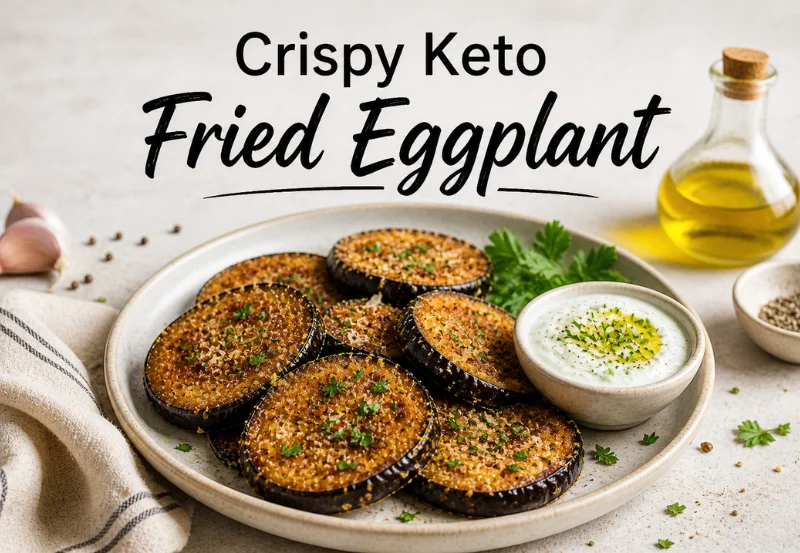
Why Your Fried Eggplant Never Turns Crispy
If you’ve ever tried making fried eggplant and ended up with something soft, oily, or just disappointing, I completely understand. I’ve had batches that looked good at first but turned soggy within minutes.
In my experience, the biggest mistake isn’t the ingredients—it’s how eggplant is handled before it even hits the pan. Most people skip one simple step, and that’s exactly what ruins the texture.
What I’ve learned over time is that once you fix moisture control, everything changes. You stop guessing, and you start getting consistent results. That’s what makes this crispy fried eggplant recipe actually work instead of just sounding good on paper.
Getting Crispy Texture Without Breadcrumbs
One thing that confuses a lot of people is how to get that golden, crispy texture without using breadcrumbs. Since we’re keeping this keto-friendly, we need a different approach.
Instead of removing crunch, we replace it with smarter options that still give structure and texture. That’s what makes this keto fried eggplant feel just as satisfying as traditional versions.
Here’s what works best:
- Almond flour for light crispiness
- Parmesan cheese for flavor + texture
- A thin coating instead of a thick crust
- Even oil distribution for proper frying
In my opinion, the key here is balance. You’re not trying to create a heavy coating—you’re just helping the eggplant crisp up naturally.
What You Need
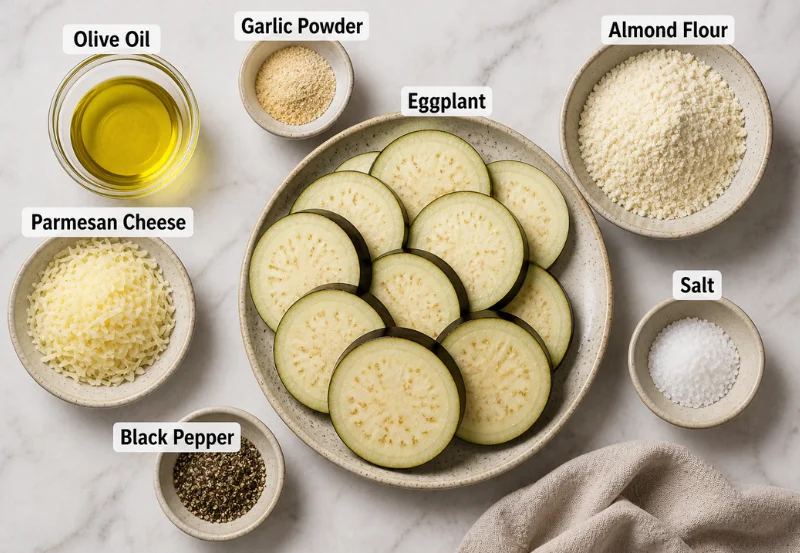
Before you start, it’s important to keep things simple but intentional. You don’t need a long ingredient list, but every item should serve a purpose.
Here’s what I recommend:
- Fresh eggplant
- Olive oil or avocado oil
- Salt
- Black pepper
Optional but powerful:
- Garlic powder
- Parmesan cheese
- Almond flour
From my experience, fresh eggplant is the biggest factor. If the base ingredient isn’t right, no seasoning can fix it. That’s why I always focus on quality first when making a low carb fried eggplant.
The One Prep Step Most People Skip
This is the step that completely changes the outcome—and honestly, I ignored it for a long time.
Eggplant holds a lot of moisture. If you fry it without removing that moisture, it absorbs oil and turns soft instead of crispy.
Here’s what I always do now:
- Slice eggplant evenly
- Sprinkle salt on both sides
- Let it sit for 15–20 minutes
- Pat it dry before cooking
Once you start doing this, the difference is immediate. In my experience, this is the biggest improvement you can make to any healthy fried eggplant recipe.
Pan vs Deep Fry: Which One Actually Works Better?
A lot of people assume deep frying is the only way to get crispiness, but that’s not always true.
In fact, I prefer pan frying for this recipe. It gives you more control and keeps things lighter.
Here’s how they compare:
- Pan frying → better control, less oil, more even texture
- Deep frying → faster, but easier to overcook or absorb oil
In my opinion, pan frying is the smarter choice for a keto fried eggplant because it keeps things balanced without losing crispiness.
Crispy vs Soggy Eggplant
This is where things really become clear. The difference between crispy and soggy eggplant isn’t random—it’s based on a few key factors.
Texture Comparison Guide:
Method | Result |
No salting | Soft, oily, uneven texture |
Too much oil | Heavy and greasy |
Proper prep + medium heat | Crispy outside, soft inside |
Overcrowded pan | Steamed, not fried |
Once you understand this, you stop making the same mistakes. This is what turns a basic dish into a reliable crispy fried eggplant recipe.
How Much Oil You Actually Need
Oil is one of the most misunderstood parts of frying eggplant. Too little, and it burns. Too much, and it becomes greasy.
Here’s the balance I follow:
Batch Size | Oil Amount | Result |
Small | 2–3 tbsp | Light and crisp |
Medium | 3–4 tbsp | Balanced texture |
Large | 4–5 tbsp | Slightly richer but controlled |
The goal is to coat the pan, not soak the eggplant.
Cooking It Right (Timing, Heat, and Control)
Cooking eggplant isn’t complicated, but it does require attention.
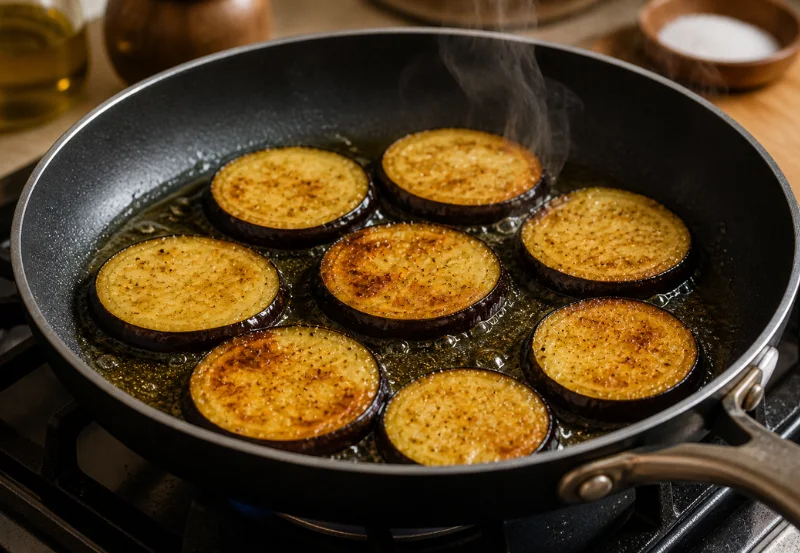
Start with medium heat and let the slices cook without constantly flipping them. This helps develop that golden surface.
In my experience, patience is what most people miss. If you flip too early or too often, you lose that crisp texture.
Let each side cook properly, then flip once. That’s usually enough.
Common Mistakes That Ruin the Texture
Even a simple recipe can go wrong if a few details are ignored. I’ve made these mistakes myself, so I know how much they matter.
Here’s what to avoid:
- Skipping the salting step
- Using high heat from the start
- Overcrowding the pan
- Adding too much coating
- Flipping too often
Fixing just these issues can instantly improve your results.
Quick Tips That Make Every Batch Better
Once you’ve made this recipe a few times, small adjustments can take it to the next level.
Here are a few things I always keep in mind:
- Cook in batches instead of overcrowding
- Keep slices uniform in size
- Use fresh oil for better flavor
- Let it rest briefly after cooking
These small details help you get consistent results every time.
How to Serve It Without Making It Heavy
Fried eggplant can feel heavy if you don’t balance it properly. That’s why I prefer to keep things light and simple when serving.
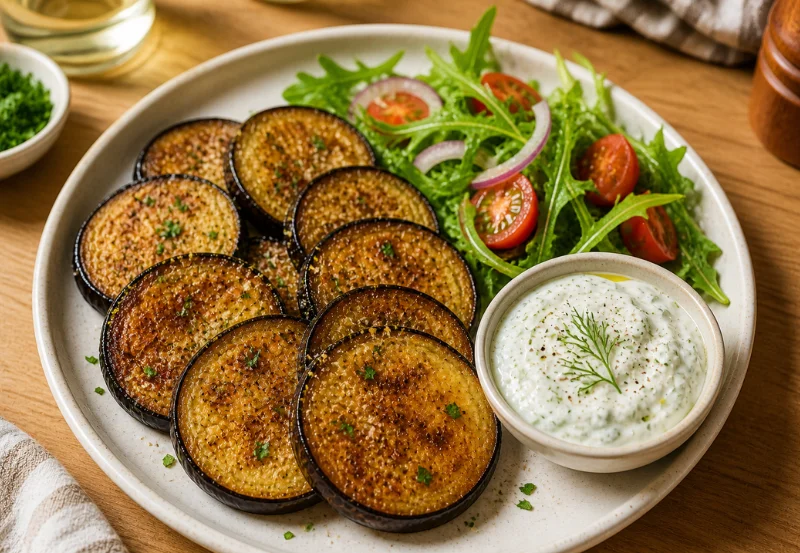
You can pair it with:
- A light yogurt-based dip
- Fresh salad
- Grilled protein
- Simple low carb sides
In my opinion, this balance is what makes it enjoyable rather than overwhelming.
Why This Recipe Actually Works Long-Term
Some recipes work once, but you don’t go back to them. This one is different.
What I like about this low carb fried eggplant is how practical it is. It’s simple, repeatable, and doesn’t require special ingredients.
Once you understand the basics, you can adjust it based on your preferences without losing results.
That’s what makes it reliable over time.
Final Thoughts
If you’ve struggled with eggplant before, this method will change how you approach it.
It’s not about doing something complicated—it’s about doing the right things at the right time. Once you control moisture, heat, and coating, everything falls into place.
In my experience, this is what makes a recipe worth keeping. It’s not just good once—it works every time.
And that’s exactly what you want from a solid keto fried eggplant recipe.