



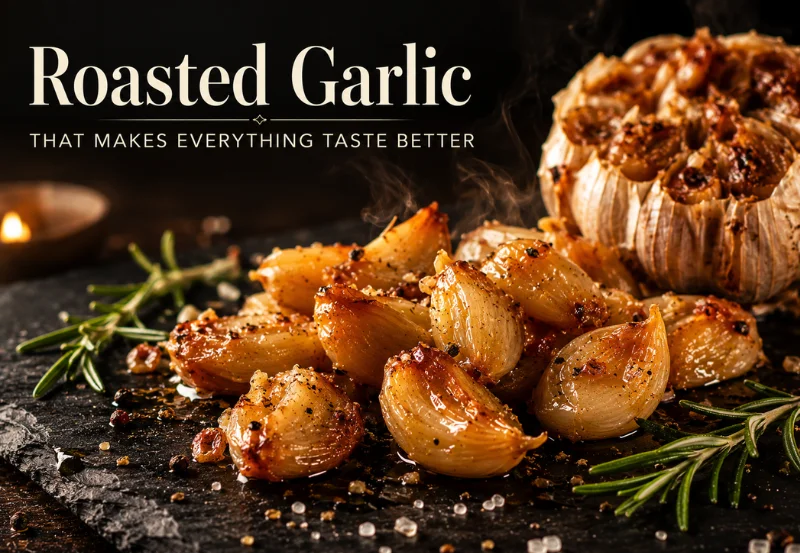
The Smell That Fills Your Kitchen Changes Everything
The moment roasted garlic starts filling your kitchen with that warm, rich, almost nutty aroma — you will understand immediately why people become completely obsessed with it.
When I pulled it out and squeezed those soft golden cloves onto a piece of keto bread, I genuinely could not believe something so simple could taste so extraordinary. That experience changed how I cook permanently.
Why Garlic Transforms in the Oven
This is something most recipes never explain — and in my opinion understanding it makes you appreciate the process so much more.
Raw garlic gets its sharp, pungent bite from a compound called allicin. When garlic is exposed to high heat over a long period, allicin breaks down and the natural sugars in the garlic begin to caramelize. This is the same Maillard reaction that creates the golden crust on a seared steak or the color on a baked cookie.
The result is caramelized garlic cloves that taste nothing like raw garlic. Instead of sharp and aggressive, the flavor becomes sweet, mellow, buttery, and deeply complex. It is the same ingredient — completely transformed.
Roasted Garlic Benefits Worth Knowing
Beyond the incredible flavor, there are genuinely impressive roasted garlic benefits that make this a smart addition to any keto diet.
Garlic is naturally rich in allicin — a powerful antioxidant compound with proven anti-inflammatory and immune-boosting properties. Even after roasting reduces allicin levels, the remaining compounds still support cardiovascular health, help regulate blood sugar, and provide strong antibacterial benefits.
Garlic also contains manganese, vitamin B6, vitamin C, and selenium — all important micronutrients that support overall health. And with less than one gram of net carbs per clove, it fits perfectly into a keto lifestyle without affecting your daily carb count in any meaningful way.
In my opinion roasted garlic is one of the most nutritious flavor additions you can make to your cooking.
What You Actually Need
This is where I love this recipe the most — the ingredient list is almost embarrassingly simple.
All you need:
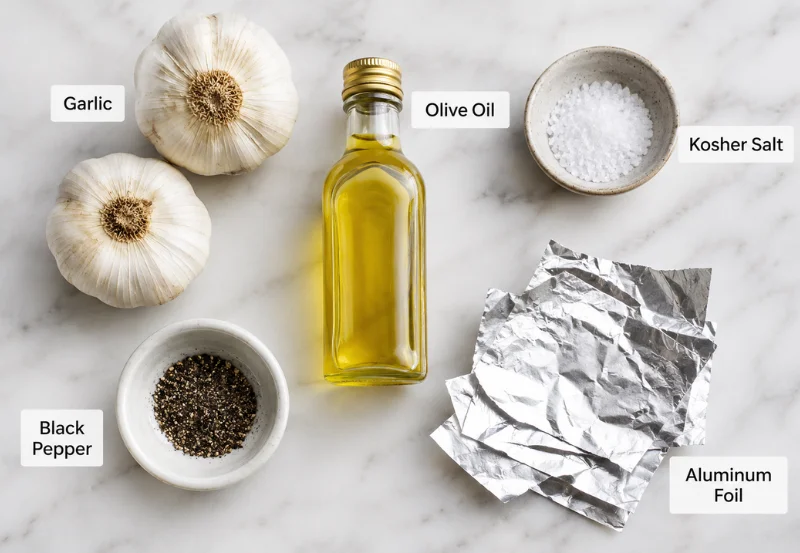
- Whole heads of garlic — 2 to 4 at a time
- Olive oil — good quality
- Kosher salt
- Freshly ground black pepper
- Aluminum foil or a small oven-safe ramekin
That is genuinely everything. No special equipment, no hard to find ingredients, nothing that requires a trip to a specialty store.
I always recommend roasting at least two or three heads at the same time. They keep well in the fridge and having a jar of roasted garlic ready to use throughout the week completely transforms your everyday cooking. The effort is minimal — the payoff is enormous.
How to Roast Garlic in Oven
Follow this method exactly and you will get perfect results every single time.
Step 1 — Preheat your oven to 400°F. High enough to caramelize the sugars but not so hot that the outside burns before the inside softens.
Step 2 — Prep the garlic. Using a sharp knife, slice the top quarter inch off the whole garlic head straight across. This exposes the tops of the individual cloves inside.
Step 3 — Season and wrap. Place the head cut side up on a square of foil. Drizzle generously with olive oil. Season with salt and pepper. Wrap tightly — the steam trapped inside is what makes the cloves turn creamy.
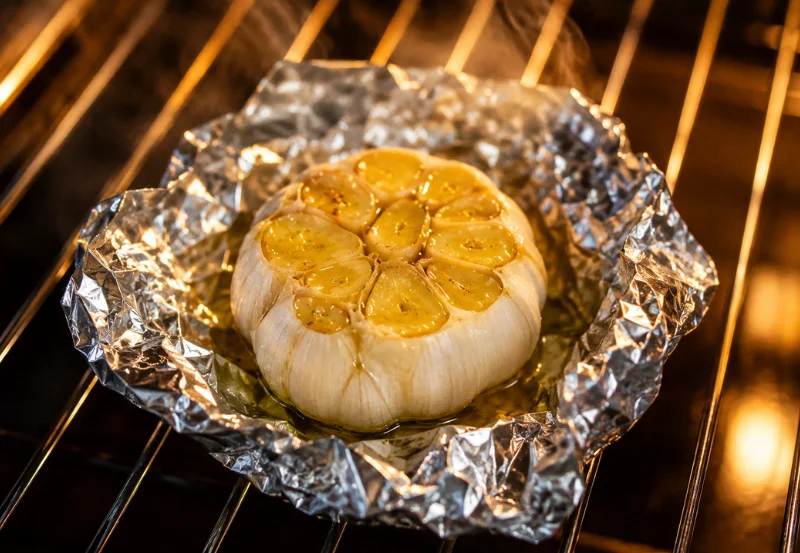
Step 4 — Roast for 40 to 45 minutes. Place directly on the oven rack and roast undisturbed until the cloves are golden and completely soft throughout.
Step 5 — Cool before handling. Let it rest for 15 minutes. The cloves will continue to soften slightly as they cool.
How to Tell When It Is Ready
This is the section most roasted garlic recipes skip entirely — and it matters more than people realize.
Timing alone is not a reliable indicator because oven temperatures vary and garlic heads differ in size. Here is exactly what to look for instead.
The visual check: The exposed clove tops should be deep golden brown — not pale yellow, not burnt black. Deep golden is the sweet spot.
The squeeze test: Gently press one of the side cloves through the skin with your fingertip. It should give completely with no resistance — like squeezing a ripe grape. Any firmness means it needs more time.
The aroma check: The smell should be sweet and nutty — not sharp or raw. If you can still detect any raw garlic scent, give it another 5 to 10 minutes.
Making Roasted Garlic Butter
In my experience roasted garlic butter is one of the single most useful things you can keep in your refrigerator — and it takes about three minutes to make.
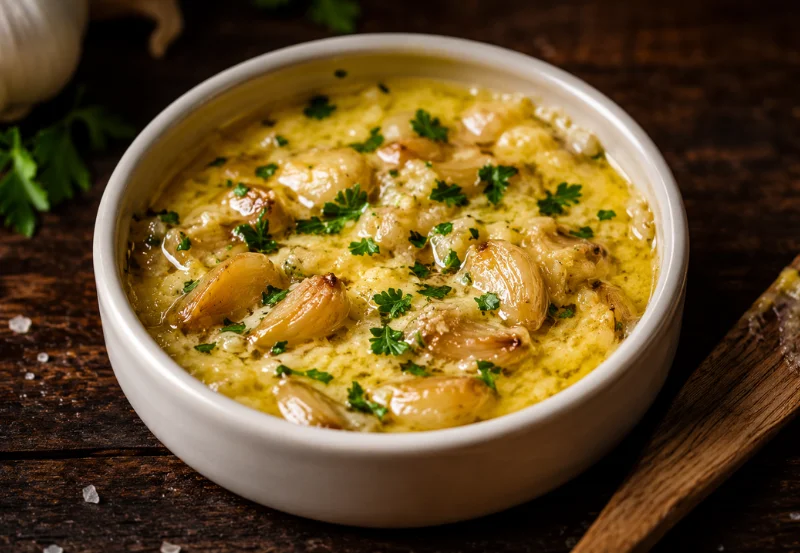
Squeeze the soft cloves from two roasted heads into a bowl. Mash them into a smooth paste using a fork. Add four tablespoons of softened unsalted butter, a pinch of kosher salt, and a tablespoon of fresh chopped parsley. Mix until fully combined and smooth.
Transfer to a small jar or roll into a log using plastic wrap. Refrigerate for up to one week or freeze for up to two months.
I use roasted garlic butter on grilled steak, melted over roasted vegetables, spread on keto flatbread, or stirred into cauliflower mash. It makes everything it touches taste significantly better.
Ten Ways to Use Roasted Garlic
Once you have a batch ready the possibilities genuinely feel endless. Here are my ten favorite ways to use it:
- Spread directly onto keto crackers or flatbread
- Mash into cauliflower mash for incredible depth of flavor
- Blend into homemade salad dressings and vinaigrettes
- Stir into bone broth soups and stews
- Mix into cream cheese for a quick keto dip
- Rub under chicken skin before roasting
- Whisk into scrambled eggs for a savory breakfast
- Blend into keto hummus with tahini and lemon
- Stir into pasta sauce for a sweet mellow garlic flavor
- Melt into butter and drizzle over grilled fish or steak
In my opinion number one and number four are the most underrated ways to use it. The combination of roasted garlic mashed into cauliflower with butter is genuinely one of the best keto side dishes I have ever made.
Storing It the Right Way
Proper storage is something most roasted garlic blogs get completely wrong — and it actually matters for both flavor and safety.
Refrigerator storage: Squeeze the roasted cloves out of their skins and transfer to a small airtight glass jar. Cover with a thin layer of olive oil to prevent oxidation. Stored this way, roasted garlic keeps beautifully in the refrigerator for up to one week.
Freezer storage: For longer storage, freeze individual cloves on a parchment-lined baking sheet for one hour then transfer to a freezer-safe bag. Frozen roasted garlic keeps for up to three months and thaws in minutes at room temperature.
One important safety note: Never store roasted garlic in oil at room temperature. This creates a risk of bacterial growth. Always refrigerate immediately and always within two hours of roasting.
Final Thoughts
Roasted garlic is one of those kitchen discoveries that genuinely changes the way you cook. Once you understand the technique, have a jar sitting in your fridge, and start adding it to everything — you will wonder how you ever cooked without it.
In my opinion it is one of the most versatile, most flavorful, and most underappreciated ingredients in the keto kitchen. It costs almost nothing, takes minimal effort, and the flavor payoff is completely disproportionate to the work involved.
Whether you spread it on flatbread, stir it into butter, mash it into cauliflower, or blend it into a dressing — roasted garlic makes everything it touches taste genuinely better.
Make a batch this week and let me know your favorite way to use it in the comments below.