



Why I Almost Never Tried Buttercup Squash
I want to be honest with you — for the longest time, I completely ignored buttercup squash at the grocery store. I would walk right past it and grab something more familiar. It looked a little unusual, I was not sure how to cook it, and honestly, I was not even sure it was keto friendly.
Then one fall, I decided to just pick one up and figure it out.
That decision completely changed how I think about low carb side dishes. Buttercup squash turned out to be one of the most satisfying, flavorful, and easy vegetables I have ever roasted. And once I nailed the method, it became a regular part of my keto meal rotation — especially during the colder months.
If you have been sleeping on this vegetable the same way I was, this blog is for you. I am going to walk you through everything I know about making the perfect roasted buttercup squash — from picking the right one at the store to serving it on your plate.
What Makes Buttercup Squash Special
Before we get into the recipe, I think it is worth taking a minute to talk about what makes this squash so special — because in my opinion, it does not get nearly enough credit in the keto world.
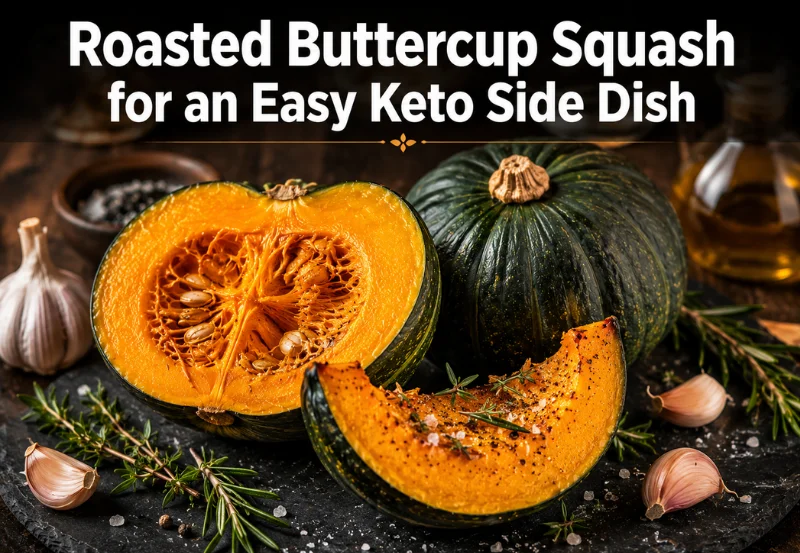
Buttercup squash is a type of winter squash with dark green skin, a flattish top, and a distinctive pale circle on the bottom. Inside, the flesh is a deep orange color — rich, dense, and packed with natural sweetness. It is most similar to kabocha squash in terms of texture and flavor, but in my experience, buttercup squash has an even creamier interior once it is roasted properly.
What really sets it apart is its sweet and nutty flavor. When you roast it at high heat, the natural sugars in the flesh caramelize beautifully, creating this incredible depth of flavor that you just cannot get from steaming or boiling. It almost tastes buttery on its own — without adding a single tablespoon of butter.
For anyone eating keto, this matters because flavor satisfaction is everything. When your side dish actually tastes amazing, you do not feel like you are missing out on anything.
Is Buttercup Squash Keto Friendly
This is one of the most common questions I get about buttercup squash, and I want to give you an honest answer.
Buttercup squash does contain more carbs than something like zucchini or cauliflower. However, in my opinion, when eaten in moderate portions, it absolutely fits into a well-structured keto diet. A half-cup serving contains roughly 8 to 10 grams of net carbs, which leaves plenty of room within a standard keto daily limit when the rest of your meal is protein and fat focused.
Here is a quick nutritional breakdown per one cup serving:
Nutrient | Per 1 Cup Serving |
Calories | 82 |
Total Carbohydrates | 21g |
Dietary Fiber | 6.7g |
Net Carbohydrates | ~10g |
Protein | 1.8g |
Vitamin A | 145% DV |
Vitamin C | 34% DV |
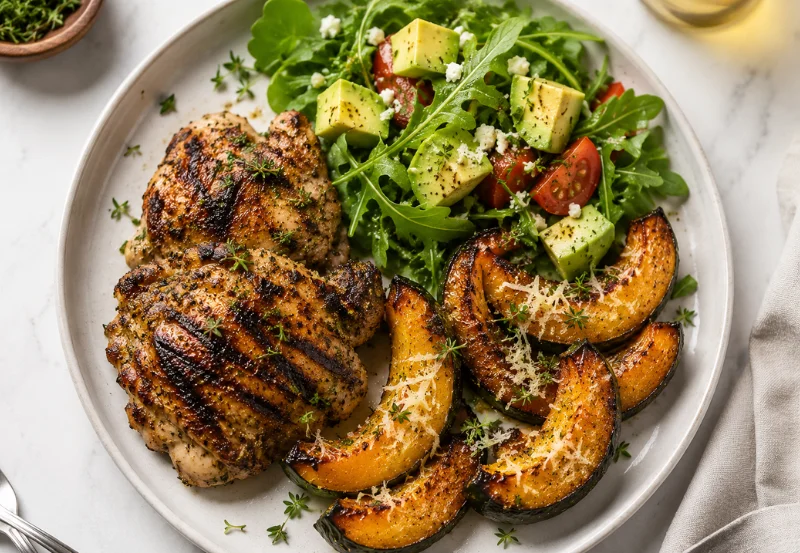
What I love about using it as a low carb winter vegetable is the nutritional payoff. You are getting vitamins, fiber, and antioxidants in one simple side dish. I always recommend pairing it with a high protein main like grilled chicken or steak to keep your overall macros balanced.
How to Pick the Perfect Buttercup Squash at the Store
One thing I wish someone had told me early on is that picking the right buttercup squash makes a huge difference in the final result. A bad squash leads to a watery, flavorless dish. A good one roasts up perfectly every single time.
Here is exactly what I look for when I am shopping:
- The skin should be deep, dark green with no soft spots or cracks
- It should feel heavy for its size — that means the flesh is dense and fresh
- The pale circle on the bottom should be firm and dry, not sunken
- Avoid any squash with a dull or yellowing skin — that means it is overripe
- Look for one between 2 and 4 pounds for the best flavor-to-size ratio
In my experience, the best place to find buttercup squash in the US is at your local farmers market during fall and early winter. Grocery stores carry them too, but the farmers market ones tend to be fresher and more flavorful. If you are shopping at a grocery store, check the specialty produce section — they are usually stocked there rather than with the regular vegetables.
What You Need for This Recipe
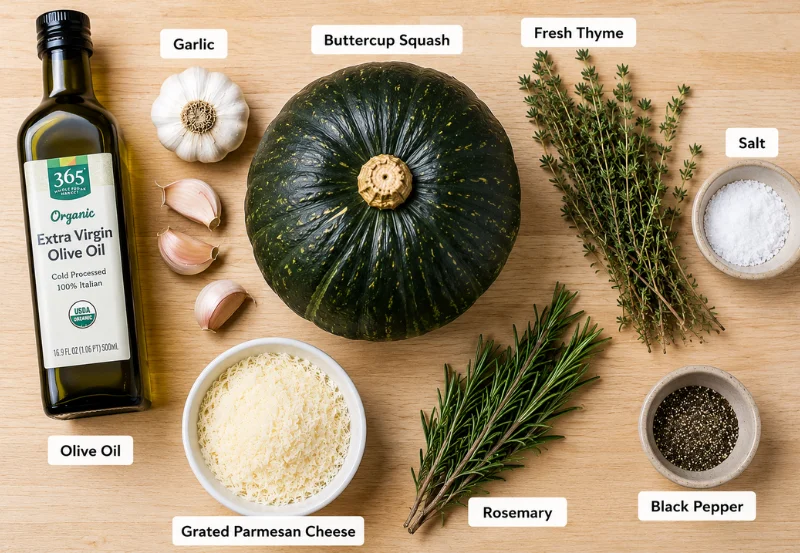
One of the things I love most about this recipe is how simple the ingredient list is. You do not need anything complicated or hard to find. Everything here is basic, clean, and keto friendly.
The essentials:
- One medium buttercup squash
- Olive oil or avocado oil
- Salt and black pepper
- Garlic powder
- Fresh thyme or rosemary
Optional additions I highly recommend:
- Grated parmesan cheese for a crispy coating
- Smoked paprika for a deeper flavor
- A drizzle of sugar-free maple syrup for a sweet and savory finish
- Fresh lemon juice for brightness
I personally always go with the parmesan coating version. In my opinion it takes the dish from a simple side to something that feels genuinely special. The cheese crisps up in the oven and creates this golden, slightly crunchy crust on the outside while the inside stays soft and creamy. It is one of those combinations that just works every single time.
The Right Way to Cut Buttercup Squash
Here is where most people struggle and honestly, I did too at first. Buttercup squash has a very tough skin and cutting it can feel intimidating if you have never done it before.
Here is the safest method I have found:
Step 1 — Microwave it briefly Place the whole squash in the microwave for 2 to 3 minutes before cutting. This softens the skin just enough to make cutting much easier and safer. I always do this step now — it is a game changer.
Step 2 — Cut off both ends Using a sharp, heavy knife, slice off the top and bottom of the squash on a stable cutting board.
Step 3 — Cut into wedges or halves Stand the squash upright and slice straight down through the center. Scoop out the seeds with a spoon, then cut each half into wedges about one inch thick.
Step 4 — Leave the skin on Unlike butternut squash, you do not need to peel buttercup squash before roasting. The skin becomes tender in the oven and is completely edible. Leaving it on also helps the wedges hold their shape while cooking.
In my experience, wedges are the best shape for roasting because they give you maximum surface area contact with the hot pan — which means more caramelization and better flavor.
How to Make Buttercup Squash Baked in the Oven
Now let us get into the actual cooking. This is where the magic happens, and I promise it is much simpler than it looks.
Step 1 — Preheat your oven to 425°F High heat is the key to getting those beautiful golden, caramelized edges. Do not try to rush this by skipping the preheat — the squash needs that immediate heat to start crisping properly.
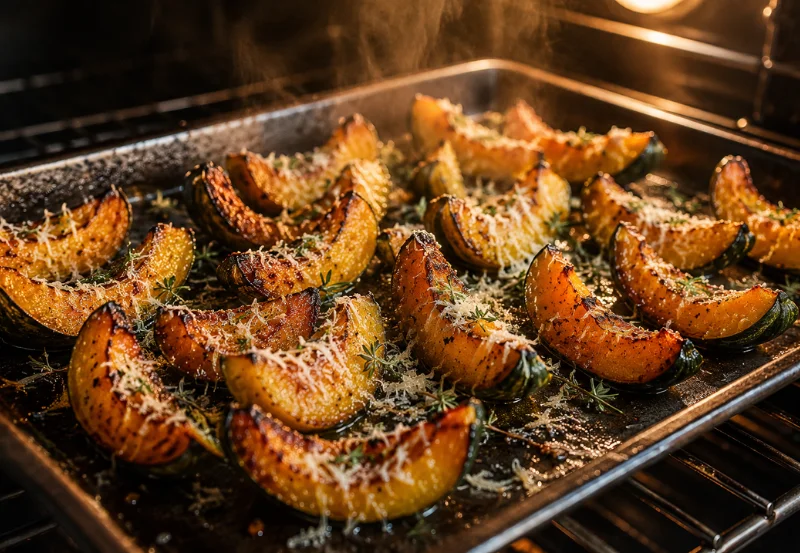
Step 2 — Season the wedges Arrange your squash wedges in a single layer on a large baking sheet. Drizzle both sides generously with olive oil. Sprinkle with salt, black pepper, garlic powder, and thyme. If you are using parmesan, add it now on both sides.
Step 3 — Roast for 20 minutes Place the baking sheet in the oven and roast for 20 minutes undisturbed. Resist the urge to open the oven and check — let the heat do its job.
Step 4 — Flip and roast again After 20 minutes, carefully flip each wedge over. The bottom should be golden and slightly caramelized at this point. Return to the oven and roast for another 15 to 20 minutes until both sides are golden and the flesh is completely tender when pierced with a fork.
Step 5 — Rest and serve Let the squash rest on the pan for 5 minutes before serving. This allows the natural sugars to settle and the exterior to firm up slightly.
Roasting Method Comparison:
Method | Temperature | Time | Result |
High heat roasting | 425°F | 35-40 min | Caramelized, crispy edges |
Medium heat baking | 375°F | 50-55 min | Soft, less caramelization |
Foil wrapped | 400°F | 45 min | Steamed texture, very tender |
I always recommend high heat roasting for the best flavor. The caramelization at 425°F is what develops that incredible sweet and nutty flavor that makes this dish so satisfying.
Common Mistakes to Avoid
Even with a simple recipe like this, a few small mistakes can affect the final result. Here are the ones I made early on so you do not have to:
- Overcrowding the baking sheet — the squash will steam instead of roast. Always use a large pan or cook in two batches
- Skipping the oil — without enough oil, the squash dries out and does not caramelize properly
- Using low heat — anything below 400°F will not give you those golden edges
- Cutting too thin — thin slices overcook and fall apart. Keep wedges at least one inch thick
- Not flipping halfway — both sides need direct contact with the hot pan to caramelize evenly
In my opinion, overcrowding is the most common mistake people make with buttercup squash recipes. Give each piece space to breathe on the pan and your results will be dramatically better.
What to Serve With Roasted Buttercup Squash
This is one of the most versatile keto side dishes I make. It pairs beautifully with almost any protein and works for both casual weeknight dinners and more special meals.
Here is what I like to serve alongside it:
- Grilled chicken thighs with herbs
- Pan-seared salmon with lemon butter
- Roasted rack of lamb
- Keto meatballs with parmesan
- Simple green salad with olive oil dressing
In my experience, the rich sweet and nutty flavor of the squash pairs best with savory proteins. The contrast between the sweetness of the roasted squash and the savoriness of the meat is what makes the whole plate feel balanced and satisfying.
Final Thoughts
If you have never tried buttercup squash before, I genuinely hope this blog encourages you to pick one up next time you see it at the store or farmers market.
In my experience, it is one of those ingredients that surprises people. It looks a little unusual from the outside but delivers an incredible flavor once it is roasted properly. That rich, creamy, caramelized flesh is unlike anything else in the low carb winter vegetable category.
And the best part? The recipe is simple, the ingredients are minimal, and the results are consistently delicious. Once you make this once, I promise it will become a regular part of your keto meal rotation — especially when the weather gets colder and you want something warm, cozy, and genuinely satisfying on your plate.
Give it a try this week and let me know how it turns out.