



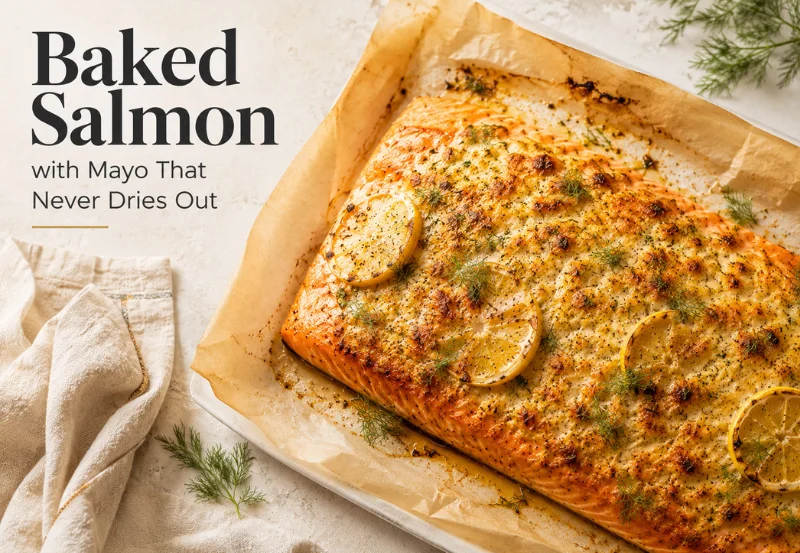
Why Most Baked Salmon Disappoints
Most people who say they do not love salmon have actually never had it cooked properly. They have had it overcooked — dry, chalky, and flavorless — which is an entirely different experience from what salmon actually tastes like when it is done right.
Baked salmon with mayo is the technique that changes everything. I discovered it almost by accident and have not baked salmon any other way since. The mayonnaise creates a protective coating over the fish that locks moisture in completely during the entire cooking process — which means you get tender, juicy, deeply flavorful salmon every single time without standing over the stove watching a timer nervously.
This blog is everything you need to know.
Why Mayo Is the Secret Ingredient
Let me explain exactly why mayo works so brilliantly on salmon — because once you understand the science, you will never skip this step.
Mayonnaise is essentially an emulsion of oil, egg yolk, and acid. When spread over salmon and placed in a hot oven, that fat layer acts as a physical moisture barrier between the fish and the dry oven heat. It prevents the surface of the salmon from losing moisture before the interior has finished cooking.
Additionally, the egg proteins in mayo brown beautifully at oven temperatures — creating that gorgeous golden top that looks like something you would pay forty dollars for at a restaurant. Butter cannot do this. Olive oil cannot do this. Only mayo delivers both moisture protection and beautiful browning simultaneously.
Choosing the Right Salmon
The salmon you start with matters significantly and in my experience most home cooks do not pay enough attention to this step. Here is my honest breakdown.
Atlantic salmon is the most widely available in the US and works beautifully for this recipe. It has a higher fat content which makes it naturally more forgiving in the oven.
Wild caught sockeye has a deeper red color and stronger flavor but lower fat content — it cooks faster and needs a slightly shorter bake time.
Center-cut fillets are my top recommendation regardless of which variety you choose. They have consistent thickness throughout which means even cooking from edge to edge. Avoid thin tail-end pieces — by the time the thicker section is done the thin end will be overcooked.
What You Need
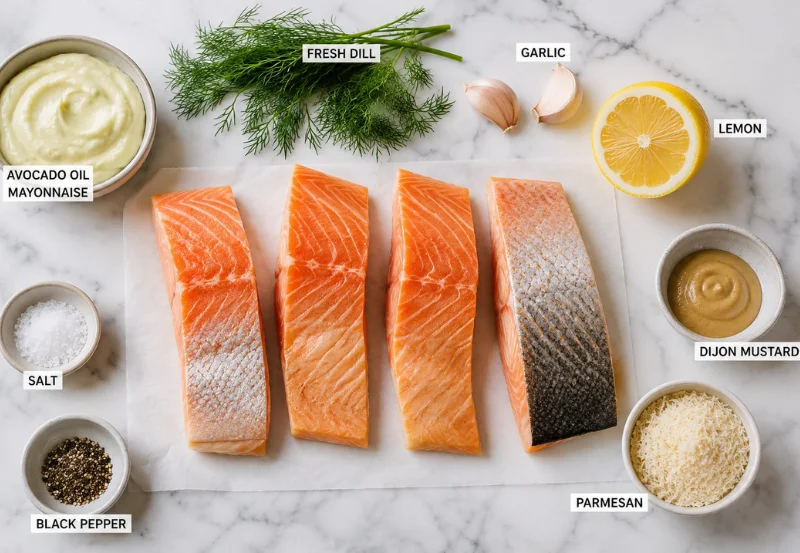
Everything in this recipe is straightforward and available at any US grocery store. The ingredient list is refreshingly short.
For the salmon:
- Salmon fillets — 4 center-cut pieces, skin on
- Salt and freshly ground black pepper
- Lemon slices for topping
For the mayo topping:
- Full fat mayonnaise — 3 tablespoons
- Fresh garlic — 2 cloves, minced
- Fresh lemon juice — 1 tablespoon
- Fresh dill or chives — 1 tablespoon chopped
- Dijon mustard — half a teaspoon
- Salt and pepper to taste
- Grated parmesan — 2 tablespoons optional
I always recommend using avocado oil mayonnaise for this recipe. It has a cleaner flavor than regular mayo, higher quality fats that fit perfectly into a keto salmon recipe, and it browns more evenly in the oven. Wholesome Yum and Primal Kitchen both make excellent versions widely available across the US.
Building Your Lemon Herb Mayo
This is the section that makes the real difference between average baked salmon and something genuinely exceptional. The mayo mixture takes about two minutes to make — and those two minutes are worth every second.
In a small bowl combine the mayonnaise, minced garlic, fresh lemon juice, chopped dill or chives, and Dijon mustard. Stir until completely smooth and uniform. Taste it before it goes on the fish — it should be bright, slightly tangy, and gently herby.
This is the lemon herb mayo that elevates the entire dish. The Dijon adds a subtle sharpness that balances the richness of the fish. The fresh dill adds that classic salmon flavor combination. The lemon juice brightens everything and prevents the mayo from tasting heavy.
In my opinion this mixture is so good you will find yourself putting it on other things too.
The Right Oven Temperature
This is the most important technical detail in the entire recipe — and most blogs get it wrong by recommending temperatures that are too high.
In my experience the single biggest cause of dry overcooked salmon at home is oven temperature. Most recipes say 400°F or 425°F. I bake my baked salmon with mayo at 325°F — and the difference is dramatic.
At 325°F the fish cooks slowly and gently. The fat stays inside the fish rather than being pushed out by aggressive heat. The mayo coating has time to set and brown gently without burning. What you end up with is a flaky salmon fillet that pulls apart in thick, juicy, perfectly cooked layers — nothing like the dry result that higher temperatures produce.
The only trade off is slightly longer bake time — about 20 minutes for a one inch thick fillet.
Step by Step Method
Follow this exactly and you will never have dry salmon again.
Step 1 — Bring salmon to room temperature Remove from the refrigerator 15 minutes before cooking. This prevents the outside from overcooking while the cold center catches up.
Step 2 — Preheat oven to 325°F Line a baking sheet with parchment paper. This prevents sticking and makes cleanup effortless.
Step 3 — Season the salmon Pat both sides of each fillet completely dry with paper towels. Season both sides with salt and pepper.
Step 4 — Apply the mayo mixture Spread the lemon herb mayo generously and evenly over the top and sides of each fillet. Do not be shy — a generous coating is what keeps the moist salmon in oven throughout the entire cooking process.
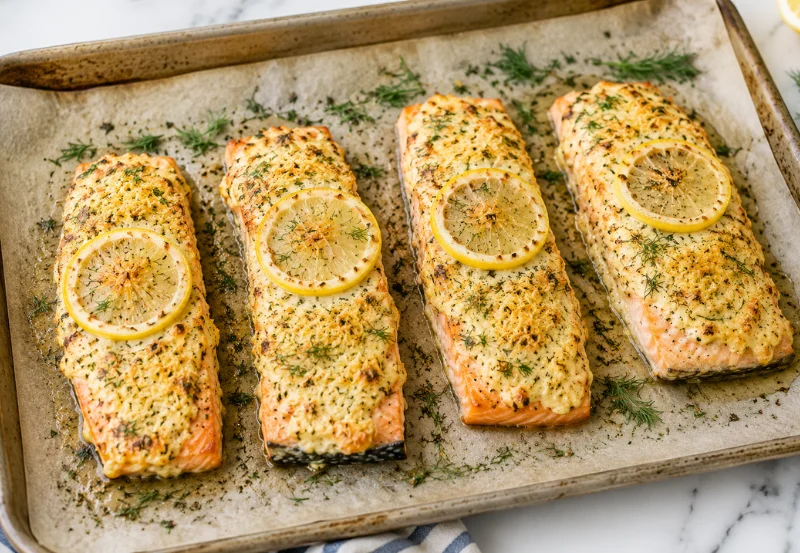
Step 5 — Top with parmesan and lemon Sprinkle grated parmesan over the mayo coating. Place a thin lemon slice on each fillet. Bake for 18 to 22 minutes until the internal temperature reaches 125 to 130°F for medium or 145°F for fully cooked.
Mayo Topping Variations Worth Trying
One of the things I love most about this recipe is how endlessly customizable the mayo topping is. Here are my four favorite variations for when you want something different:
Classic Lemon Herb — Mayo, fresh dill, lemon juice, garlic, Dijon. My go-to and the one I make most often.
Parmesan Crust — Add two tablespoons of finely grated parmesan to any base mayo mixture. Creates an incredible golden cheesy crust that is deeply satisfying.
Spicy Sriracha — Mayo, sriracha, lime juice, garlic powder. Perfect for US audiences who love heat — the sriracha caramelizes beautifully in the oven.
Cajun Style — Mayo, Cajun seasoning, smoked paprika, garlic. The smokiness pairs perfectly with the rich salmon flavor and looks stunning coming out of the oven.
In my opinion the parmesan crust version is the most crowd-pleasing — every single person I have served it to has asked for the recipe.
What to Serve Alongside
Baked salmon with mayo is versatile enough to work as both a casual weeknight meal and an impressive dinner party dish. Here is what I recommend pairing it with for a complete keto meal:
Light and fresh: Simple arugula salad with lemon vinaigrette and shaved parmesan — the bitterness of the arugula balances the richness of the salmon beautifully.
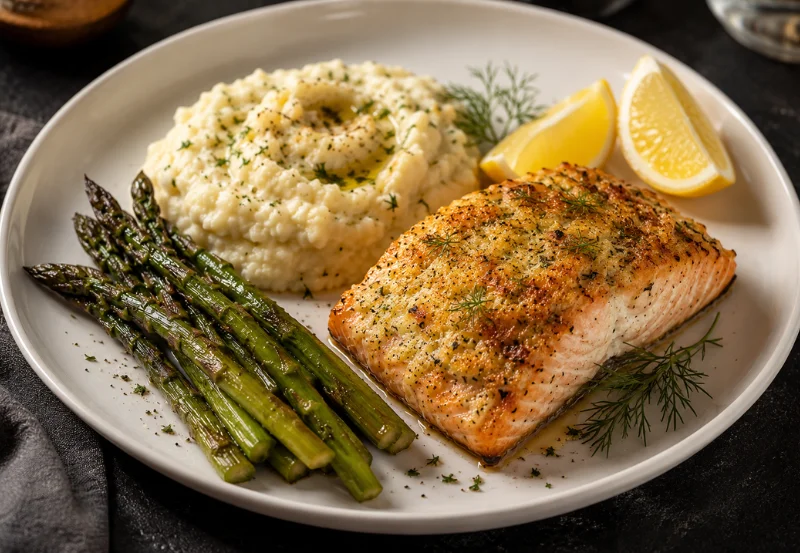
Hearty and satisfying: Cauliflower mash with roasted garlic butter — creamy, low carb, and it absorbs the lemon mayo juices from the salmon perfectly.
Quick and easy: Sautéed asparagus or roasted broccoli with olive oil and garlic — ready in 15 minutes and pairs with almost any protein.
In my experience the cauliflower mash pairing is the most satisfying full plate — it feels genuinely indulgent while staying completely on track with keto macros.
Storing and Reheating
Leftover baked salmon stores and reheats well when you follow one important rule — never use high heat to reheat it.
Storage: Let the salmon cool completely then transfer to an airtight container. Store in the refrigerator for up to two days. The mayo coating actually helps preserve the moisture even in storage.
Reheating: Place the leftover salmon on a baking sheet and warm at 300°F for 8 to 10 minutes until just heated through. This low and slow reheating method is the only way to avoid drying out the fish a second time.
Cold leftover option: In my opinion cold leftover baked salmon with mayo is actually one of the best lunch options on keto — flake it over a simple salad with extra lemon juice and capers. It is genuinely better cold than reheated.
Final Thoughts
Baked salmon with mayo is one of those techniques that completely reframes how you think about cooking fish at home. Once you understand why the mayo works, nail the right temperature, and build a proper lemon herb mayo from scratch — there is no going back to the old way.
In my opinion this is the most foolproof keto salmon recipe you can have in your weekly rotation. It works for busy Tuesday dinners, impressive Saturday meals with guests, and everything in between. The ingredients are minimal, the technique is simple, and the results are consistently restaurant quality.
Make it once with the method I have shared here and I am completely confident you will never look at your salmon fillets the same way again.