



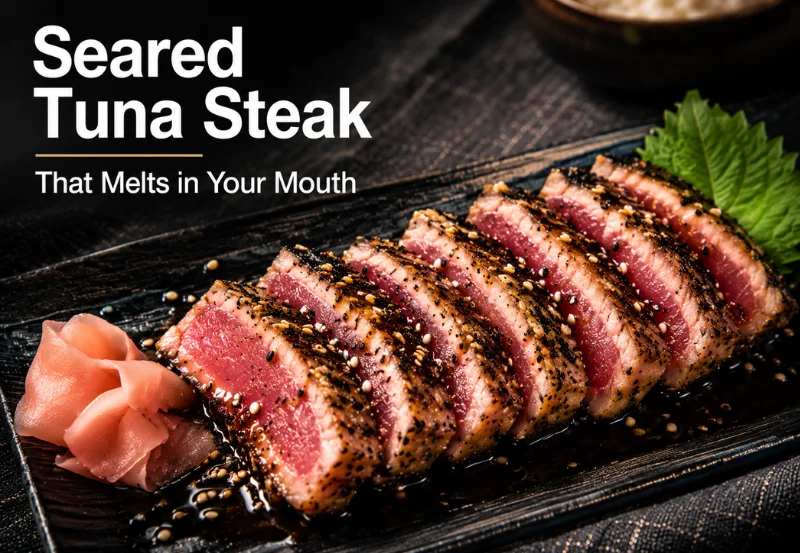
Most People Cook Tuna Steak Completely Wrong
The biggest mistake home cooks make with tuna steak is treating it like salmon or cod — cooking it all the way through until there is no pink left. And that single mistake is what turns a genuinely extraordinary piece of fish into something dry, chalky, and completely forgettable.
This tuna steak recipe is built around one fundamental truth — tuna is not a regular fish. It is more like a steak than anything else in the seafood aisle. It should be seared hot and fast on the outside while staying silky and pink in the center. Once you cook it that way for the first time, you will never go back to overcooked tuna again.
Why Tuna Is Not Like Other Fish
Tuna has a completely different muscle structure from most fish. Where salmon has thin delicate flakes held together by fat, tuna has dense compact muscle fibers — firm, lean, and meaty — that behave more like beef than any other fish.
This is why tuna steak tastes less like fish and more like a tender beef steak when cooked correctly. The texture is firm and satisfying with zero flakiness. The flavor is rich, clean, and mildly oceanic without any strong fishiness.
In my opinion this is the single most important thing to understand before you ever put tuna in a pan. Once you accept that tuna is essentially a steak from the ocean, every cooking decision you make from that point forward becomes obvious and instinctive.
Choosing the Right Tuna
Choosing the right tuna at the store determines everything about the final result — and in my experience most people do not spend nearly enough time on this step.
Ahi tuna steak — also called yellowfin or bigeye — is my top recommendation for this recipe. It has a beautiful deep pink color, mild buttery flavor, and the firm meaty texture that makes it ideal for high heat searing.
Sushi grade tuna is the label to look for if you plan to serve it medium rare or rarer. While the term is not legally regulated, it signals the fish has been handled and frozen to standards safe for raw consumption. Look for Trader Joe’s, Whole Foods, or any reputable US seafood counter for the best quality options.
Is Tuna Steak Raw Safe to Eat
This is the question I get asked most about tuna steak and I want to give you a completely honest and clear answer.
The pink raw center of a properly seared tuna steak raw is safe to eat when you use sushi grade fish from a reputable source. The outer sear kills any surface bacteria while the unfrozen interior of sushi grade fish has been processed to destroy parasites through flash freezing.
However if you are pregnant, immunocompromised, or serving this to young children, I always recommend cooking the tuna fully through to 145°F per USDA guidelines. In my opinion for healthy adults using quality sushi grade fish, medium rare tuna is completely safe and the far superior eating experience.
What You Need
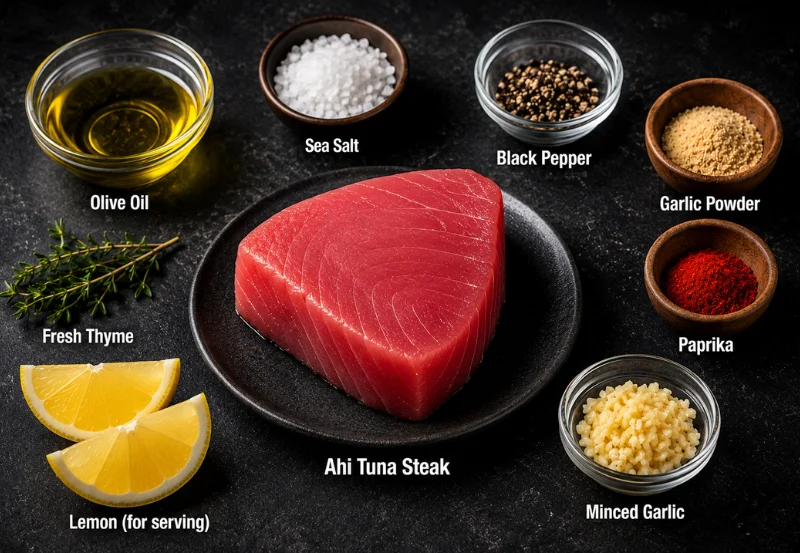
This tuna steaks recipe keeps the ingredient list short and clean — letting the quality of the fish do the work.
For the tuna:
- 2 ahi tuna steaks — about 1 inch thick, 6 oz each
- 1 tablespoon avocado oil or grapeseed oil
- 1 teaspoon kosher salt
- 1 teaspoon freshly ground black pepper
- 1 teaspoon sesame seeds optional for crusting
For the sauce:
- 2 tablespoons soy sauce or coconut aminos
- 1 tablespoon fresh lemon or lime juice
- 1 teaspoon fresh ginger, grated
- 1 teaspoon sesame oil
- 1 teaspoon honey or monk fruit sweetener
- 1 small garlic clove, minced
I always use avocado oil or grapeseed oil for searing tuna — both have high smoke points that can handle the extreme heat needed for a proper sear. Olive oil smokes too quickly at the temperatures required and can impart a bitter flavor to the crust.
How to Cook Tuna Steak
Follow these steps and you will get a perfect sear every single time.
Step 1 — Bring to room temperature Remove tuna from the refrigerator 15 minutes before cooking. Cold fish in a hot pan causes uneven cooking — the outside sears while the inside stays cold and raw beyond the point you want.
Step 2 — Pat completely dry Pat both sides of each tuna steak firmly dry with paper towels. This is non-negotiable — surface moisture creates steam which prevents the sear you are looking for.
Step 3 — Season at the last minute Season both sides generously with salt and pepper right before the fish hits the pan. Early seasoning draws moisture to the surface.
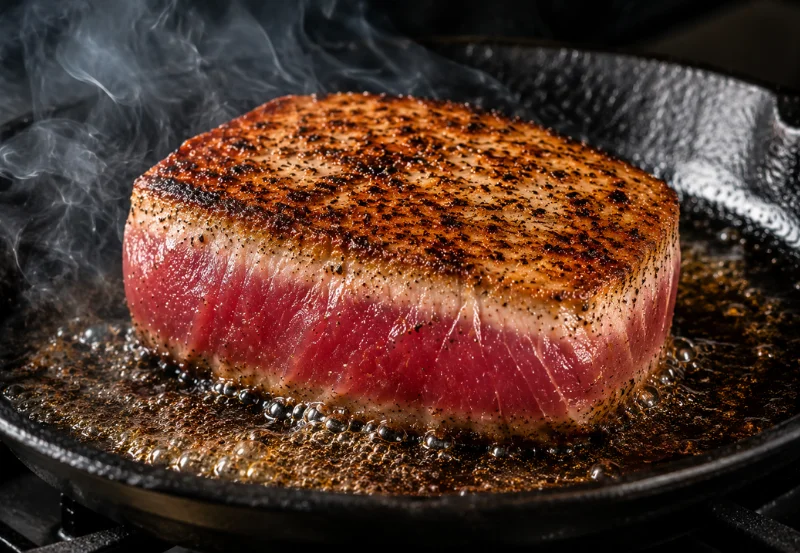
Step 4 — Sear in a screaming hot pan Heat your pan over high heat for 2 full minutes. Add oil and wait until it shimmers. Place the tuna away from you and sear for exactly 60 to 90 seconds per side without touching it. You want a deeply golden crust and a warm pink center.
Step 5 — Rest and slice Rest for 2 minutes then slice against the grain immediately before serving.
The Doneness Guide
This is the section that completely changes how confidently you cook tuna steak — and it is something most tuna steaks recipe blogs never include.
Doneness | Internal Temp | Center Color | Texture |
Rare | 110°F to 115°F | Bright pink, almost raw | Silky, very soft |
Medium Rare | 115°F to 125°F | Warm pink center | Tender, buttery |
Medium | 125°F to 140°F | Slightly pink | Firmer, less juicy |
Well Done | 145°F and above | Fully opaque | Firm, can be dry |
In my opinion medium rare at 115°F to 125°F is the sweet spot for tuna steak. This is what gives you that melt-in-your-mouth texture that makes the dish genuinely extraordinary. An instant read thermometer is the most reliable way to hit this exactly — I recommend using one every single time until you develop an intuitive feel for it.
Making the Perfect Tuna Steak Sauce
The tuna steak sauce is what elevates this recipe from a simple piece of seared fish to something that tastes like a restaurant created it specifically for you.
Combine the soy sauce or coconut aminos, fresh lemon juice, grated ginger, sesame oil, and sweetener in a small bowl. Whisk until the sweetener dissolves completely. Add the minced garlic and let it sit for at least 5 minutes before using — this allows the garlic to mellow slightly and the flavors to meld together.
Drizzle generously over the sliced tuna immediately before serving. Do not marinate the tuna in this sauce beforehand — the acid in the lemon juice begins to “cook” the tuna similar to ceviche and will change the texture of the surface before it reaches the pan.
Tuna Steaks Recipe Variations
Once you have mastered the base recipe these variations are worth exploring — each one takes the dish in a completely different and equally delicious direction.
Blackened Tuna — Coat both sides generously with a blackening spice blend of smoked paprika, cayenne, garlic powder, onion powder, and dried oregano before searing. The spices create an incredibly flavorful crust that is deeply smoky and slightly spicy.
Sesame Crusted Tuna — Press both sides of the tuna into a mixture of white and black sesame seeds before searing. The seeds toast beautifully in the hot oil creating a nutty crust that pairs perfectly with the Asian-inspired sauce.
Lemon Herb — Season with lemon zest, fresh thyme, and cracked pepper. Finish with a squeeze of fresh lemon and extra virgin olive oil. Clean, bright, and elegant.
In my experience the blackened variation is the most crowd-pleasing — the spice crust adds enormous flavor depth and makes a visually stunning presentation on any plate.
Keto Nutrition and Pairings
Tuna steak is one of the most impressive high protein fish dinner options in the entire keto world — and the nutritional profile makes it a genuinely smart regular choice.
One six ounce tuna steak contains approximately 40 grams of protein, zero carbohydrates, and minimal fat — making it one of the leanest and highest protein cuts of any fish or meat available. It is also rich in omega-3 fatty acids, selenium, and vitamin B12.
For a complete keto plate here is what I personally serve alongside it:
Light option: Simple arugula salad with lemon vinaigrette and shaved parmesan.
Hearty option: Sautéed zucchini or roasted asparagus with olive oil and lemon.
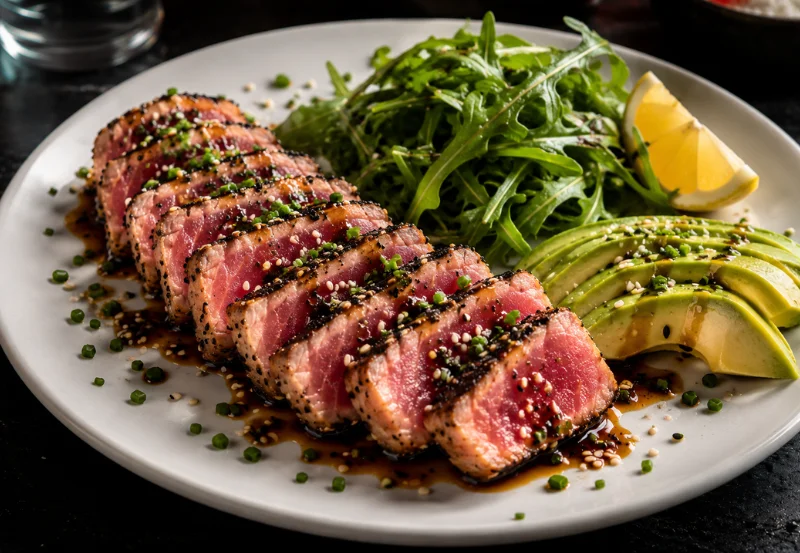
Restaurant style: Avocado slices, pickled ginger, and a drizzle of the sesame soy sauce across the whole plate.
Final Thoughts
Tuna steak is one of those ingredients that completely rewards the home cook who takes the time to understand it. The moment you stop treating it like regular fish and start treating it like the lean, meaty, extraordinary protein it actually is — everything about cooking it becomes clearer and more intuitive.
In my opinion this is one of the most impressive meals you can put on a keto dinner table with minimal effort. The sear takes under five minutes. The sauce takes two minutes. The result looks and tastes like something you would happily pay forty dollars for at a restaurant.
Make it once properly and I promise it will become one of the most reached-for proteins in your entire recipe rotation.