



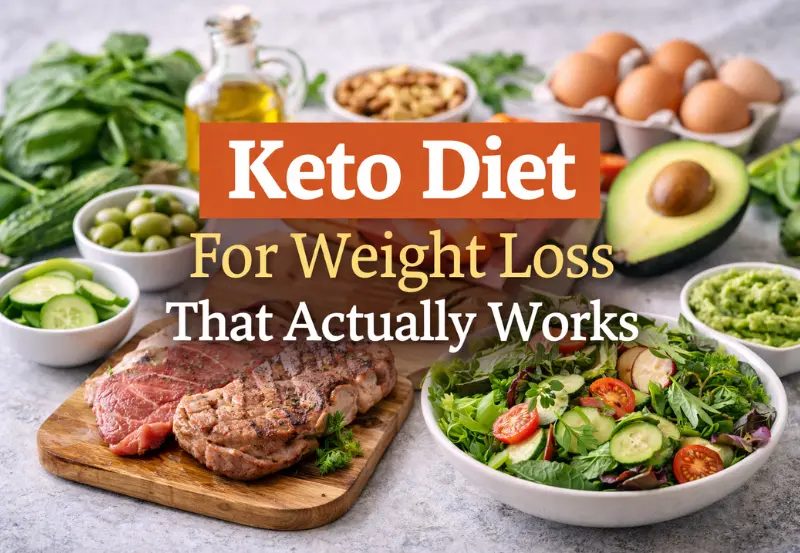
Understanding How the Keto Diet Triggers Fat Loss
The keto diet for weight loss has become one of the most searched nutrition strategies in recent years. But search volume does not guarantee understanding. Many people try keto without learning how it works, then assume it fails when results slow down.
The ketogenic diet is not simply a low-carb trend. It is a metabolic strategy built around hormonal control. When carbohydrates decrease, insulin levels drop. Lower insulin allows the body to release stored fat and use it as energy.
Instead of depending on glucose from carbs, the body shifts into ketosis. In ketosis, your liver produces ketones, which become the primary fuel source. This shift changes how your body manages hunger, energy, and fat storage.
When structured correctly, the keto diet for weight loss works because it reduces insulin spikes, stabilizes appetite, and encourages consistent fat burning.
However, results depend on execution.
Why the Keto Diet for Weight Loss Works
The effectiveness of the keto diet is rooted in physiology. Unlike traditional calorie-restricted diets that focus only on eating less, keto changes how the body processes energy.
When carbohydrates are restricted:
- Insulin levels decrease.
- Glycogen stores become depleted.
- The body begins breaking down fat for fuel.
- Ketones provide a steady energy source.
- Hunger hormones become more stable.
This hormonal shift explains why many people experience fewer cravings on keto compared to high-carb diets.
Another important factor is satiety. Fat and protein digest more slowly than carbohydrates. Meals feel more filling, which naturally reduces calorie intake without constant willpower.
The keto diet for weight loss works best when carbohydrates remain consistently low and food choices remain whole and unprocessed.
Keto Diet for Beginners What to Know Before Starting
The keto diet for beginners can feel overwhelming because information online often conflicts. The simplest approach is to focus on three principles:
- Reduce carbohydrate intake significantly.
- Maintain moderate protein intake.
- Increase healthy fat intake to support energy.
A typical macro structure looks like this:
- 70–75% of calories from fat
- 20–25% from protein
- 5–10% from carbohydrates
Most individuals stay under 50 grams of carbs per day, and many prefer 20–30 grams to enter ketosis more quickly.
Protein should not be excessively high. While protein is essential for muscle preservation, too much can interfere with ketosis for some individuals.
The keto diet for beginners becomes manageable when you focus on simple meals instead of complicated recipes.
Keto Diet Foods That Support Sustainable Weight Loss
Choosing the right keto diet foods determines long-term success. The goal is not to eat “anything low carb.” The goal is to eat nutrient-dense, satisfying foods that support metabolic health.
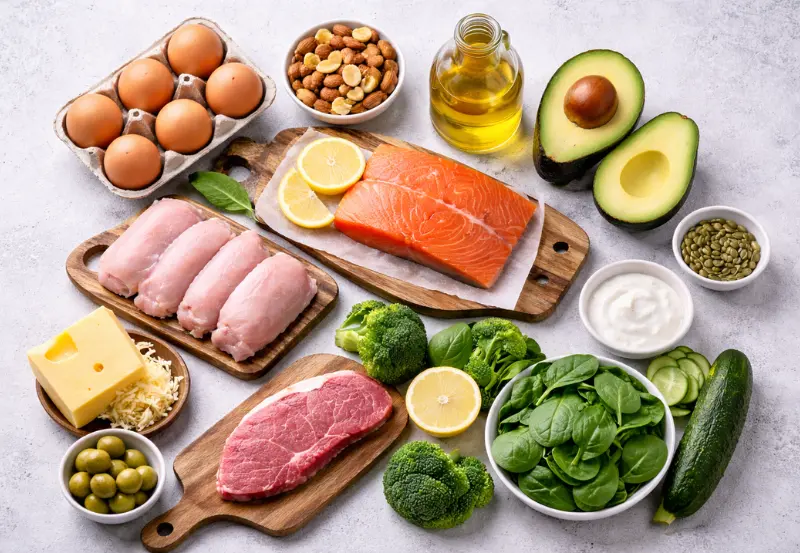
High-quality keto diet foods include:
- Eggs
- Salmon and other fatty fish
- Grass-fed beef
- Chicken thighs
- Pork chops
- Ground turkey
- Avocados
- Olive oil
- Coconut oil
- Full-fat dairy
- Leafy greens
- Zucchini
- Cauliflower
These foods provide essential nutrients while keeping carbohydrate intake low.
Highly processed keto snacks often contain hidden sugars or inflammatory oils. Whole foods remain the foundation of a sustainable ketogenic diet.
Keto Food List for Beginners
If you are building a grocery list, keep it structured and repeatable. A clean keto food list for beginners removes confusion and simplifies meal planning.
Protein Sources
- Chicken thighs
- Ground beef
- Pork chops
- Ground turkey
- Eggs
- Tofu (for vegetarian keto)
Healthy Fats
- Butter
- Olive oil
- Avocado oil
- Coconut oil
- Heavy cream
Low-Carb Vegetables
- Spinach
- Broccoli
- Zucchini
- Mushrooms
- Asparagus
- Bell peppers
Moderate Extras
- Almonds
- Walnuts
- Pumpkin seeds
- Cheese
This keto food list for beginners ensures variety while keeping carbohydrate intake controlled.
Keto Diet for Weight Loss Vegetarian Approach
Many assume keto requires heavy meat consumption. That is not accurate. The keto diet for weight loss vegetarian approach can be effective when properly structured.
Vegetarian keto requires careful protein planning. Eggs and dairy often become primary protein sources. Tofu and tempeh also provide structure for plant-based meals.
Healthy fats remain essential. Without sufficient fat intake, energy levels may drop.
A vegetarian keto plate often includes:
- Eggs or tofu
- Leafy greens
- Avocado
- Olive oil or butter
- Moderate cheese
The keto diet for weight loss vegetarian variation works best when dairy consumption remains balanced and vegetable intake stays diverse.
How Much Weight Can You Expect to Lose
Initial weight loss on keto often includes water loss. Carbohydrate restriction reduces glycogen storage, which decreases water retention.
After the initial phase, fat loss becomes more gradual. Most individuals lose:
- 1–2 pounds per week on average
- More in the first month
- Slower amounts as body fat decreases
Consistency matters more than speed.
The keto diet for weight loss becomes sustainable when it is viewed as a structured lifestyle rather than a short-term fix.
Hunger Control and Energy Stability on Keto
One of the most significant advantages of the ketogenic diet is appetite regulation.
Carbohydrate-heavy meals cause rapid blood sugar spikes followed by crashes. These crashes increase hunger. Keto reduces this cycle.
Protein and fat provide longer-lasting energy. As blood sugar stabilizes, cravings decrease. Many people naturally reduce calorie intake without feeling deprived.
This appetite control is one reason the keto diet for weight loss that actually works continues to grow in popularity.
When hunger decreases, adherence improves.
7 Day Sample Keto Meal Plan for Weight Loss
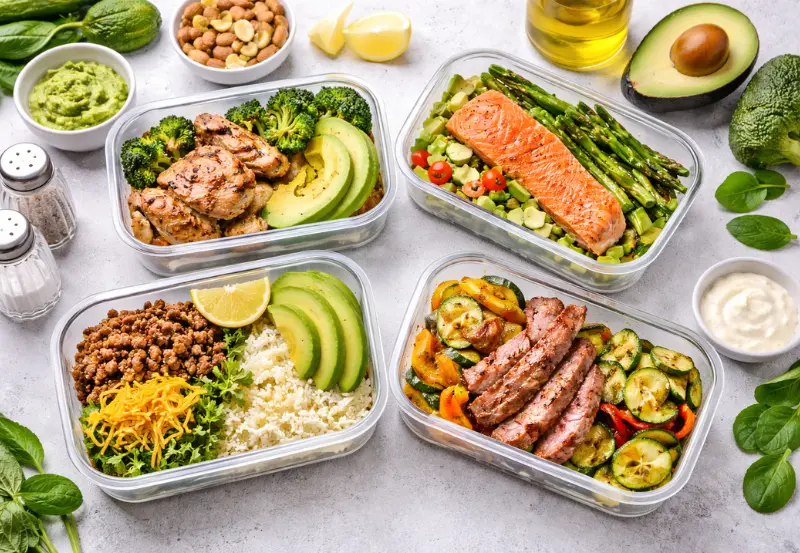
Understanding theory is helpful, but execution drives results. A structured plan removes guesswork and prevents decision fatigue.
Below is a simple framework using whole keto diet foods that support consistent fat loss.
Day 1
Breakfast: Eggs cooked in butter with spinach
Lunch: Grilled chicken salad with olive oil
Dinner: Salmon with roasted zucchini
Day 2
Breakfast: Greek yogurt with chia seeds
Lunch: Ground beef with sautéed broccoli
Dinner: Pork chops with asparagus
Day 3
Breakfast: Omelet with cheese and mushrooms
Lunch: Tuna salad with avocado
Dinner: Chicken thighs with cauliflower mash
Day 4
Breakfast: Scrambled eggs with avocado
Lunch: Turkey lettuce wraps
Dinner: Baked salmon with spinach
Day 5
Breakfast: Keto smoothie with protein powder
Lunch: Egg salad with olive oil
Dinner: Steak with roasted vegetables
Day 6
Breakfast: Cottage cheese with nuts
Lunch: Ground turkey bowl with zucchini
Dinner: Shrimp cooked in garlic butter
Day 7
Breakfast: Omelet with bell peppers
Lunch: Chicken salad with avocado
Dinner: Pork chops with broccoli
This sample approach keeps meals simple and repeatable. It also works well for the keto diet for beginners who need structure.
If you prefer a plant-based variation, the keto diet for weight loss vegetarian approach can substitute tofu, paneer, or eggs for meat-based proteins.
How to Avoid Weight Loss Plateaus on Keto
At some point, progress may slow. This does not mean the keto diet stopped working. It usually means adjustments are needed.
Common reasons for plateaus include:
- Hidden carbohydrates in sauces
- Eating excessive calories from nuts and cheese
- Lack of movement
- Poor sleep
- Inconsistent tracking
Fat loss depends on both hormones and energy balance. Even on keto, calorie intake matters.
If progress stalls:
- Track food intake for one week
- Increase daily steps
- Reduce processed keto snacks
- Improve sleep quality
- Recalculate macros based on current weight
The keto diet for weight loss works best when adjustments are gradual, not extreme.
Exercise and the Keto Diet
Exercise enhances fat loss but does not replace dietary structure.
Strength training is particularly effective on keto because it preserves muscle mass while fat decreases. Muscle preservation protects metabolism.
Cardio can support calorie expenditure, but overdoing it while under-eating may increase stress hormones.
A balanced weekly structure may include:
- 3 days strength training
- 2 days light cardio
- 2 rest or mobility days
For beginners, walking daily is enough to support the keto diet for weight loss.
Consistency matters more than intensity.
Common Myths About the Keto Diet
Misinformation spreads quickly. Understanding facts prevents unnecessary fear.
Myth 1 Keto Is Only About Eating Fat
The ketogenic diet is about carbohydrate restriction first. Fat intake supports energy, but structure matters more than excess butter.
Myth 2 You Can Eat Unlimited Calories
Even with stable insulin levels, calorie balance still influences weight loss.
Myth 3 Keto Is Dangerous Long Term
When built around whole keto diet foods and balanced nutrition, many individuals maintain keto safely under medical guidance.
Myth 4 You Cannot Build Muscle on Keto
Adequate protein intake combined with resistance training supports muscle maintenance.
Myth 5 Vegetarians Cannot Follow Keto
The keto diet for weight loss vegetarian approach is achievable with proper planning.
Understanding these realities helps maintain long-term confidence.
Long Term Sustainability Strategy
The keto diet for weight loss becomes powerful when it becomes sustainable.
Instead of viewing keto as temporary, treat it as structured nutrition. Many people eventually transition into a low-carb maintenance approach after reaching their goal weight.
Long-term sustainability includes:
- Prioritizing whole foods
- Avoiding constant “keto desserts”
- Monitoring portion sizes
- Reintroducing carbs carefully if desired
- Maintaining protein intake
Sustainability is what separates short-term dieters from long-term success stories.

Who Should Be Cautious
Although many people benefit from keto, certain individuals should consult a healthcare provider before starting:
- Individuals with diabetes
- Those on blood pressure medication
- Pregnant or breastfeeding women
- Individuals with kidney conditions
Medical supervision ensures safety.
Final Thoughts
The keto diet for weight loss works when it is built on structure, not trends.
Focus on whole keto diet foods.
Use a clean keto food list for beginners.
Keep carbohydrates low and protein moderate.
Adjust calories as needed.
Stay consistent through plateaus.
The keto diet for beginners may feel complex at first, but simplicity drives results.
Whether you follow a standard approach or a keto diet for weight loss vegetarian plan, the foundation remains the same: reduce carbohydrates, prioritize protein, include healthy fats, and stay consistent.
Fat loss does not require perfection. It requires structure.
When implemented correctly, the keto diet for weight loss that actually works becomes less about restriction and more about metabolic efficiency.