



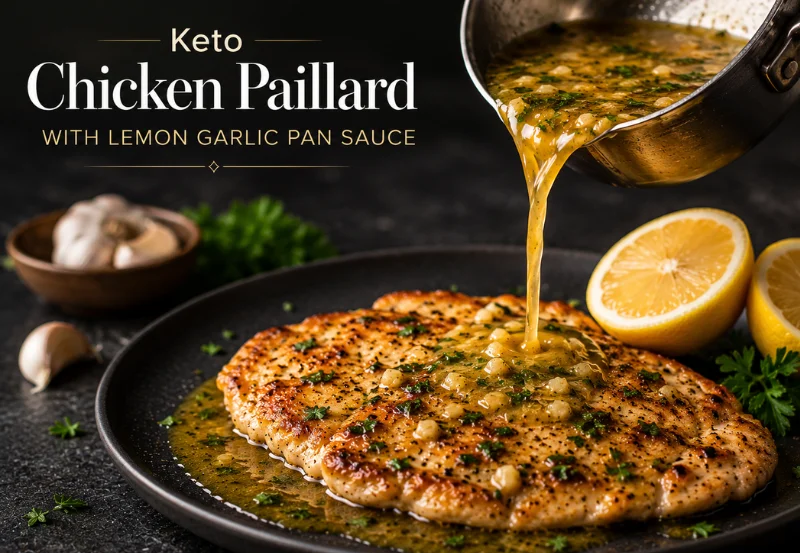
French Cooking Is Not as Scary as You Think
Most people hear the word paillard and immediately assume it belongs in a professional kitchen — not on a Tuesday night dinner table at home. I used to think the exact same thing.
But here is the truth. Chicken paillard is one of the simplest, most approachable techniques in French cooking. There is no complicated sauce, no difficult timing, no special equipment you do not already own. What you get in return is a golden, juicy, deeply flavorful keto chicken dinner that looks like it took hours and actually takes about twenty minutes.
If French-sounding dishes have ever intimidated you, this is the recipe that will completely change your perspective.
What Is Chicken Paillard
Chicken paillard refers to a boneless chicken breast that has been pounded thin — typically to about a quarter inch thickness — and then quickly cooked over high heat.
The word paillard comes from French culinary tradition and simply means a thin, flat piece of meat. The technique was designed for speed and efficiency — a thin piece of meat cooks fast, browns beautifully, and stays remarkably juicy because it never spends enough time on heat to dry out.
In my opinion this is one of the most underrated cooking techniques for chicken. Once you understand it, you will wonder why you ever cooked thick chicken breasts any other way.
Why It Is a Perfect Keto Chicken Dinner
Chicken paillard is naturally keto friendly with essentially zero carbs in the base dish. One serving of chicken breast contains approximately 26 to 30 grams of protein, healthy fats from the butter and olive oil used in cooking, and no carbohydrates whatsoever.
What makes it especially smart for keto is the lemon butter pan sauce. Butter, garlic, lemon juice, and chicken stock create a sauce with almost zero carbs that tastes indulgent and rich. You get restaurant quality flavor without a single gram of unnecessary carbs touching your plate.
In my experience this is one of the most satisfying keto chicken dinner recipes you can add to your weekly rotation.
Choosing the Right Chicken
This is a step most recipes rush past and it genuinely matters. The chicken you start with determines the final result more than any technique or seasoning you apply afterward.
I always recommend boneless skinless chicken breasts for classic chicken paillard. Look for breasts that are medium-sized — around six to eight ounces each. Oversized chicken breasts are harder to pound evenly and tend to tear. Pre-cut thin chicken cutlets from the grocery store also work well and save prep time.
Whatever you choose make sure the chicken is completely dry before it hits the pan. Pat both sides firmly with paper towels — this single step is what gives you that beautiful golden sear instead of grey steamed chicken.
The Pounding Technique
This is the heart of chicken paillard and the step most home cooks get wrong. Getting the pounded chicken breast to an even thickness is everything — uneven chicken means some parts overcook while others are still underdone.
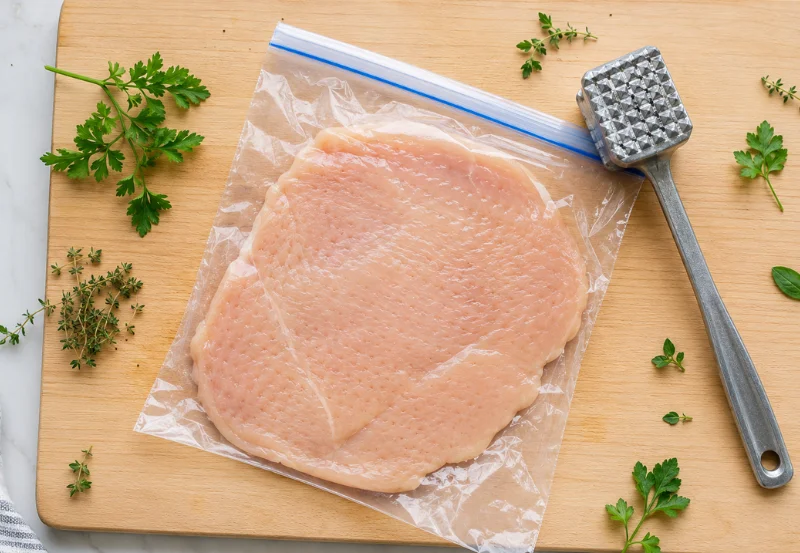
Here is exactly how I do it every time. Place one chicken breast inside a zip-lock bag or between two sheets of plastic wrap. Starting from the thickest part of the breast, pound outward toward the edges using the flat side of a meat mallet. Work slowly and deliberately — you are flattening it evenly, not beating it aggressively.
Target a quarter inch thickness throughout. Hold the chicken up to the light — if it is uniformly translucent it is ready.
Seasoning Matters More Than You Think
Thin chicken cutlets have significantly more surface area than a regular chicken breast — which means more opportunity to build flavor through proper seasoning.
I season both sides generously with kosher salt, freshly ground black pepper, and garlic powder right before the chicken hits the pan. Not ten minutes before. Not an hour before. Right before. Salting too early draws moisture out of the thin cut which prevents the golden crust you are working toward.
One additional step I always recommend — a light dusting of smoked paprika on one side. It adds a subtle depth and a gorgeous golden-red color to the finished chicken that makes the dish look as impressive as it tastes.
Getting the Perfect Sear
The sear is what makes chicken paillard genuinely special and it comes down to three things — the right pan, the right heat, and the discipline to leave the chicken alone.
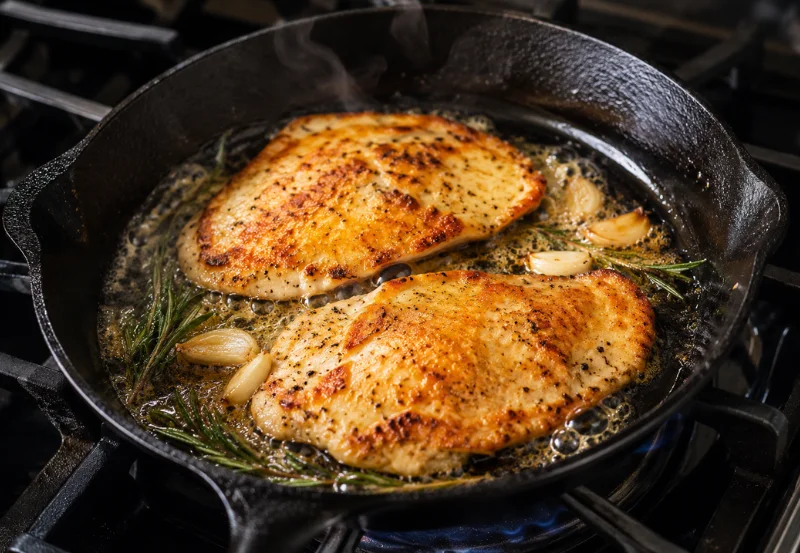
Use a heavy stainless steel or cast iron skillet. Heat it over medium-high until a drop of water flicks away immediately. Add a combination of olive oil and butter — the oil raises the smoke point while the butter adds flavor. When the butter stops foaming the pan is ready.
Lay the chicken away from you and do not touch it for three full minutes. In my experience the biggest mistake people make is moving the chicken too early. Leave it. A proper golden crust releases naturally from the pan — forced early flipping tears it completely.
Making the Lemon Butter Pan Sauce
This is the moment the whole dish comes together — and it happens entirely in the same pan in about two minutes. Do not clean the pan between cooking the chicken and making the sauce. Those browned bits left behind are pure flavor.
Reduce heat to medium. Add one tablespoon of butter and two minced garlic cloves to the pan. Stir for thirty seconds. Add a generous squeeze of fresh lemon juice and a quarter cup of chicken bone broth. Let it bubble and reduce for ninety seconds while scraping up all the browned bits from the pan.
The result is a lemon butter pan sauce that is silky, tangy, rich, and completely keto friendly. Spoon it generously over the chicken right before serving.
The Arugula Salad Topping
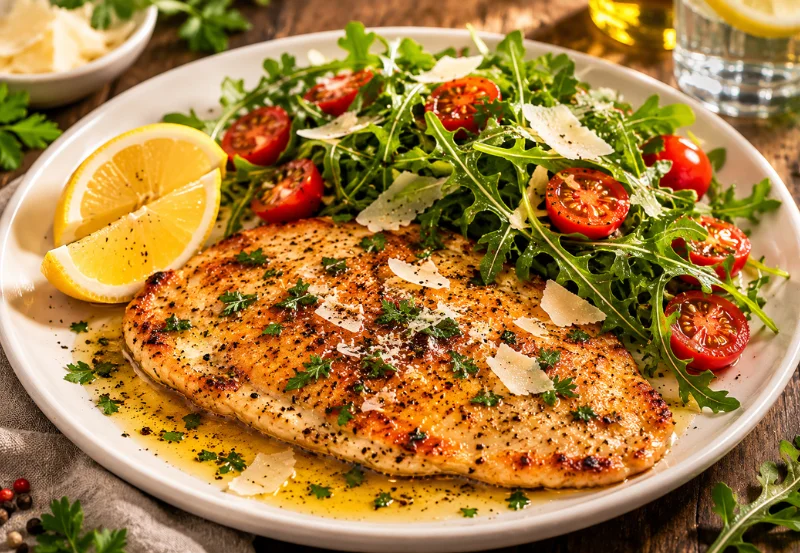
Serving chicken paillard topped with a fresh arugula salad is the classic bistro way — and in my opinion it is also the smartest way. The peppery bitterness of the arugula cuts through the richness of the lemon butter sauce and adds freshness, color, and texture to every bite.
The dressing could not be simpler. Toss fresh arugula with a squeeze of lemon juice, a drizzle of good olive oil, salt, and pepper. Add halved cherry tomatoes and shaved parmesan if you have them. Pile the salad directly on top of the hot chicken right before serving.
The heat from the chicken very slightly wilts the arugula which is exactly what you want.
What Else to Serve With It
Chicken paillard is incredibly versatile as a keto meal. The light, elegant flavor pairs well with almost any low carb side. Here are my personal recommendations depending on what kind of meal you are putting together:
For a light dinner: Serve with just the arugula salad and extra lemon on the side. Clean, fresh, and genuinely satisfying.
For a heartier meal: Add sautéed asparagus, roasted zucchini, or cauliflower mash alongside. The lemon butter pan sauce works beautifully drizzled over any of these sides too.
For entertaining: Plate the chicken on a large serving platter, drizzle the sauce over everything, pile the salad on top, and finish with shaved parmesan and lemon slices. It looks stunning with almost no effort.
Storing and Reheating
Chicken paillard stores well and reheats better than most people expect — as long as you follow one important rule.
Store the cooked chicken and the pan sauce separately in airtight containers in the refrigerator for up to two days. Storing them together causes the chicken to absorb all the sauce and become soggy.
To reheat, warm the chicken in a dry skillet over medium-low heat for about ninety seconds per side. Warm the sauce separately in a small saucepan over low heat. Recombine on the plate right before serving.
I do not recommend microwaving chicken paillard — the thin cut reheats unevenly and loses that tender texture that makes it so good the first time.
Final Thoughts
Chicken paillard is one of those recipes that genuinely changed how I approach weeknight cooking. The technique is simple, the results are consistently impressive, and the fact that it is completely keto friendly with almost zero carbs makes it one of the smartest meals you can have in your regular rotation.
In my opinion what makes this dish so special is how effortlessly it bridges the gap between everyday cooking and restaurant quality food. That golden sear, that silky lemon butter pan sauce, that fresh arugula salad piled on top — it looks and tastes like something you paid forty dollars for and you made it at home in twenty minutes.
Make it once and I am confident it will become one of your most reached-for weeknight recipes.